@ahmetcantryk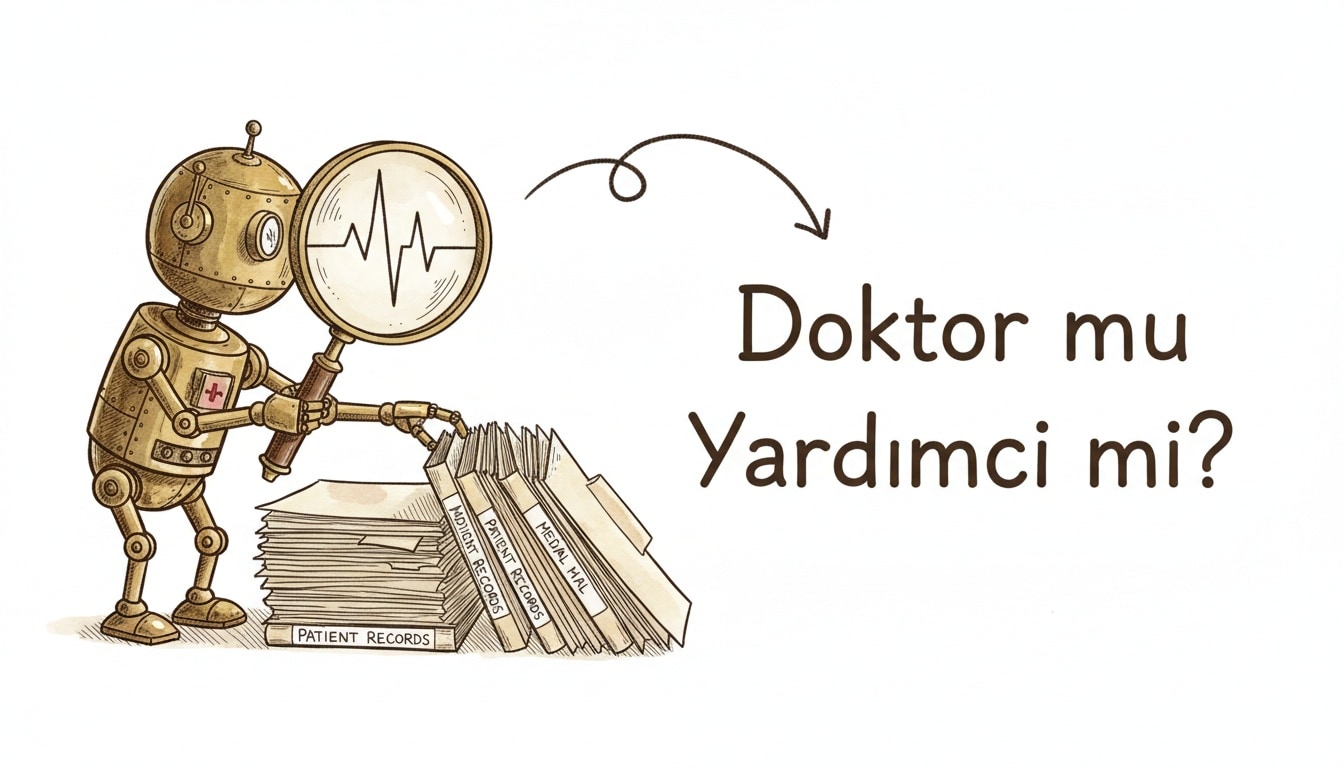
What is ChatGPT Health, exactly?
ChatGPT Health is a feature that lets you securely connect Apple Health data and supported medical records to ChatGPT so it can answer questions using your actual health information instead of generic advice. It began rolling out to logged-in US users 18 and older on July 23, 2026, across web and iOS, on Free, Go, Plus, and Pro plans, according to OpenAI's announcement. If you've ever pasted a lab report into ChatGPT and asked "is this normal," this is that workflow built into a proper, ongoing connection instead of a one-off copy-paste.
What it actually connects
Two sources feed the feature: Apple Health (steps, sleep, workouts, heart rate, and anything else synced into the Health app) and supported medical records from participating healthcare systems, which can include lab results, visit summaries, and medication lists. Once connected, ChatGPT can compare recent lab values against prior ones, summarize what's changed since your last appointment, track whether you've been taking a medication consistently, and correlate lifestyle data — sleep quality, workout frequency — against how you've been feeling. OpenAI reports more than 300 million people already use ChatGPT weekly for health-related questions, which is the real context for this launch: OpenAI is formalizing a use case that was already happening informally, at scale, without structured data behind it.
Where it's genuinely useful
The strongest use cases are ones where you're the one who has to make sense of fragmented information: preparing questions before a specialist visit, understanding what a specific lab value trend actually means in context, or catching that a new prescription might interact with something you're already taking (worth double-checking with a pharmacist regardless). It's also useful for the unglamorous admin side of managing chronic conditions — tracking medication adherence, summarizing a year's worth of visits before switching doctors, or translating dense clinical language into something you can actually act on.
Where it must not replace a clinician
ChatGPT Health is explicitly positioned as an assistant, not a diagnostic tool, and that distinction matters more than the marketing copy around it suggests. It has no access to imaging results unless you upload them manually, no physical exam, and no liability if it gets something wrong — a real clinician carries all three. Treat anything it says about symptoms, diagnoses, or treatment changes as a starting point for a conversation with an actual doctor, never as the conversation's conclusion. This is especially true for anything urgent: chest pain, breathing difficulty, or sudden neurological symptoms need a phone call to a real provider, not a chat window.
Data handling and what actually leaves your device
According to OpenAI, connected medical records, Apple Health data, and the conversations built on top of them are not used for model training or advertising. That's a meaningfully different privacy posture than a general ChatGPT conversation, and it reflects the sensitivity of the data category — health information carries legal protections in most jurisdictions that ordinary chat logs don't. Still, "not used for training" isn't the same as "never stored" or "never processed by any system," so it's worth reading OpenAI's specific data-handling documentation for the feature rather than assuming it behaves like the rest of the product.
A concrete example of the workflow
Say you've had bloodwork done twice this year, six months apart, and your doctor mentioned your cholesterol panel had "improved a bit" without specifics. With records connected, you could ask ChatGPT to lay the two panels side by side, flag which values moved and by how much, and explain in plain language what LDL, HDL, and triglyceride shifts typically mean — then use that summary to ask your doctor a sharper follow-up question at the next visit, rather than nodding along to a vague reassurance. That's the shape of use case OpenAI is targeting: not replacing the clinician's judgment, but making sure you walk into the room with the right questions already formed.
Regional availability, and why it's US-only for now
Requirement | Detail |
|---|---|
Location | United States only at launch |
Age | 18 and older |
Account | Logged-in ChatGPT account required |
Plans | Free, Go, Plus, and Pro |
Platforms | Web and iOS |
Data sources | Apple Health, supported medical record providers |
The US-first rollout isn't an accident of engineering — health data regulation varies enormously by country and, within the US, healthcare record interoperability itself is still uneven between systems. Expect the record-connection side of the feature (as opposed to the Apple Health side) to expand slowly as OpenAI adds integrations with additional health systems, similar to how the broader ChatGPT product has staged capabilities by plan and region before.
How this fits the rest of the AI health-tracking stack
ChatGPT Health's Apple Health connection is really a bridge into a much bigger 2026 trend: your phone, your wearable, and now your chat assistant are all converging on the same biometric data. If you're also wearing a ring or tracking glucose, our 2026 health wearables survey covers what that hardware can and can't actually measure with regulatory-grade accuracy — context worth having before you ask ChatGPT to interpret a number your device generated. And since this whole feature depends on processing sensitive data close to the user, it's worth understanding the broader question of what actually runs on-device versus in the cloud on a modern phone, since that boundary determines a lot about what a "connected" health feature is quietly doing in the background.
A safe-use checklist
1. Confirm connected sources: only link accounts/records you're comfortable
   OpenAI's systems processing
2. Treat lab-value interpretation as context, not diagnosis
3. Verify anything medication-related with your pharmacist or doctor
4. Never substitute a chat response for urgent or emergency care
5. Review OpenAI's specific ChatGPT Health data policy, not the general one
6. Periodically audit which sources are still connected and disconnect
   anything you no longer use
My take
The interesting part of this launch isn't the feature itself — health-adjacent chatbot use has been happening for years without a formal product around it. It's that OpenAI is choosing to build structured, ongoing data connections into a product that already has hundreds of millions of weekly users asking health questions informally. That's a bet that giving people better context produces better outcomes than leaving them to paste lab PDFs manually, and it's probably right, as long as the guardrail holds: an assistant that helps you ask a doctor better questions, not one that answers instead of the doctor.
Frequently Asked Questions
Is ChatGPT Health available outside the United States?
Not yet. As of the July 2026 rollout, it's limited to logged-in US users 18 and older on web and iOS. OpenAI hasn't published a timeline for international expansion.
Does connecting my health records mean OpenAI trains on my medical data?
OpenAI states that connected medical records, Apple Health data, and related conversations are not used for model training or advertising, which is a stricter policy than applies to general ChatGPT usage.
Can ChatGPT Health diagnose a medical condition?
No. It's designed as an assistant that helps you understand and organize your own health information, not a diagnostic tool. Anything concerning should go to a licensed clinician, and anything urgent needs immediate in-person or emergency care.
What plans include ChatGPT Health?
It's available on Free, Go, Plus, and Pro ChatGPT plans for eligible US users, on both web and iOS.