@ahmetcantryk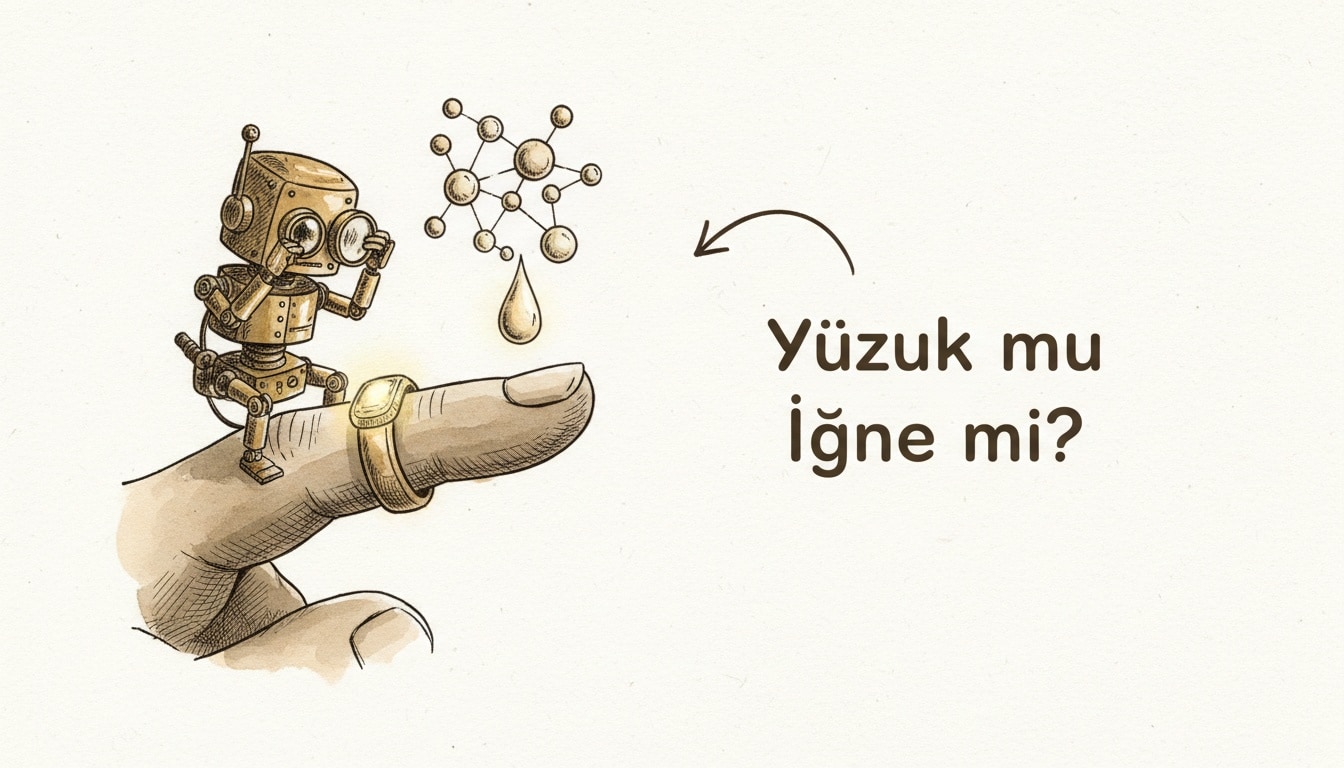
The shift worth naming
Health wearables spent a decade competing on step counts. In 2026, the competition moved to something harder to fake: continuous, discreet biometric sensing that tries to catch problems before you feel symptoms. The catch is that "tries to" is doing a lot of work in that sentence — some of this category is genuinely useful and some of it is still ahead of the regulatory clearance that would justify the marketing around it.
Smart rings and discreet tracking
Rings won the "wearable nobody notices" category by default — no screen, no charging anxiety from a watch you also want to wear to bed, and sensor placement (the finger has better blood flow signal than the wrist for some metrics) that genuinely improves certain readings. The current generation tracks sleep stages, resting heart rate variability, skin temperature trends, and recovery scores well enough that several now compete directly with dedicated fitness trackers on data quality, not just discretion.
Next-gen biometric sensors
Beyond rings, 2026's sensor upgrades cluster around continuous, passive signals rather than on-demand measurements: temperature trend tracking that flags illness onset a day or two before symptoms peak, more accurate optical heart-rate sensing during motion (historically the weakest point of wrist-based sensors), and skin-conductance sensing being explored for stress and recovery signals. None of these are dramatic on their own; together, they're why a modern wearable's "readiness" or "recovery" score has gotten noticeably more reliable than it was two or three years ago.
The push toward non-invasive glucose monitoring
This is the category everyone wants and nobody has fully solved. As of mid-2026, no consumer wearable has FDA clearance to measure or estimate blood glucose on its own — that regulatory bar remains unmet across every smartwatch and smart ring on the market, per GoodRx's review of glucose-tracking wearables. The accuracy gap explains why: current non-invasive consumer devices show roughly 20–40%+ error against lab-grade continuous glucose monitors, which run 8–12% error. That's not a rounding difference — it's the gap between "directionally interesting" and "safe to make a dosing decision on."
There's real movement, though. A UC San Diego prototype smart ring using sweat-based sensing recently posted a glucose MARD (mean absolute relative difference) of around 13.72%, approaching invasive CGM accuracy for the first time in a consumer-adjacent form factor, while also tracking ketones, lactate, uric acid, and vitamin C from the same sweat sample. It's a prototype, not a shipping product, but it's the clearest signal yet that the physics problem — getting a reliable glucose signal without a needle — is closer to solved than the regulatory and manufacturing path around it.
Earbuds: health tracking meets live translation
The other 2026 wearable trend worth naming is earbuds absorbing health features that used to be watch-exclusive — in-ear heart rate and temperature sensing, mainly — while simultaneously pushing into real-time translation as a flagship feature. The in-ear position turns out to be a genuinely good spot for some biometric signals, and pairing that with an assistant like the ones compared in our AI voice assistant roundup is where earbuds are heading next: a device that's simultaneously a health sensor and a conversational AI interface.
Accuracy caveats and the clearance gap
Category | 2026 status | Regulatory clearance |
|---|---|---|
Sleep stage tracking | Mature, broadly consistent across brands | Wellness claim, no medical clearance needed |
Heart rate / HRV | Strong at rest, improving during motion | Wellness claim |
Smart ring glucose sensing | Prototype-stage, ~13.7% MARD in best case | Not FDA-cleared |
Consumer glucose smartwatches/rings (shipping) | 20–40%+ error vs. lab CGM | Not FDA-cleared |
Prescription CGM (Dexcom, Abbott, etc.) | Established, clinical-grade | FDA-cleared |
The pattern to watch for: any device marketed with "glucose insights" or "metabolic health scores" that isn't a prescription CGM is making a wellness claim, not a medical one, regardless of how clinical the app dashboard looks. That distinction is exactly the gap our on-device AI coverage keeps running into elsewhere too — impressive on-device processing doesn't automatically mean regulatory-grade accuracy.
Where wearable data actually goes next
None of this sensor data is useful in isolation — it's valuable once something can interpret it in context, which is exactly why 2026's wearable story is inseparable from the software around it. ChatGPT Health now lets you connect Apple Health data directly to a conversational assistant that can compare trends over time, and ambient devices like Gemini for Home are starting to fold biometric routines into everyday voice interactions rather than a standalone app you have to remember to open. The hardware improvements covered above only pay off if the software layer connecting them treats a single reading as one data point in a trend, not a verdict — the same caution that applies to the glucose claims above applies to almost everything a wearable reports.
A what-to-trust buyer's checklist
1. Check for explicit FDA/CE medical clearance, not just "clinically inspired"
   marketing language
2. For glucose specifically: assume wellness-only unless it's a
   prescription CGM
3. Sleep and HRV tracking are mature enough to trust directionally
   across most major brands
4. Cross-check a new device's accuracy claims against independent
   reviews, not just the manufacturer's own study
5. Treat any single reading as a trend input, not a standalone
   diagnostic result
6. Re-evaluate ring vs. watch based on which metric matters most to
   you — sensor placement genuinely affects certain readings
Battery life and the discretion trade-off
Discreet form factors carry a real cost: a ring's battery typically lasts 4–7 days on a single charge, compared to 1–3 days for a health-focused smartwatch running a bright always-on display. That's not a minor footnote — a device you have to charge overnight is one that misses overnight sleep data on the nights you forget, which quietly undermines exactly the continuous-tracking promise the category is built on. If sleep tracking is your primary use case, battery life arguably matters more than any individual sensor spec.
My take
The gap between what wearables can sense and what they're cleared to diagnose is going to keep closing slowly, and that's the right pace even though it's frustrating for anyone hoping a $300 ring replaces a glucose meter this year. The UC San Diego prototype is the most convincing evidence yet that non-invasive glucose sensing is a solvable engineering problem — but "solvable" and "on your wrist next quarter" are different timelines, and the marketing around this category is consistently ahead of both.
Frequently Asked Questions
Can any smart ring or watch measure blood glucose accurately in 2026?
Not to a medical standard. No consumer wearable has FDA clearance for glucose measurement as of mid-2026, and shipping non-invasive devices show 20–40%+ error compared to prescription continuous glucose monitors.
Are smart rings more accurate than smartwatches for health tracking?
For some metrics, yes — finger placement gives a cleaner blood flow signal for certain readings than the wrist does, which is part of why rings have become competitive with watches on sleep and HRV tracking specifically.
What does "MARD" mean for glucose monitoring accuracy?
Mean Absolute Relative Difference — a standard metric comparing a device's glucose reading against a reference measurement. Lower is better; prescription CGMs run around 8–12% MARD, while current non-invasive consumer prototypes are approaching that range but haven't matched it in shipping products.
Should I trust a wearable's "metabolic health score"?
Treat it as a wellness estimate, not a clinical measurement, unless the underlying sensor is an FDA-cleared prescription device. Use it for trends over time rather than any single reading.