@ahmetcantryk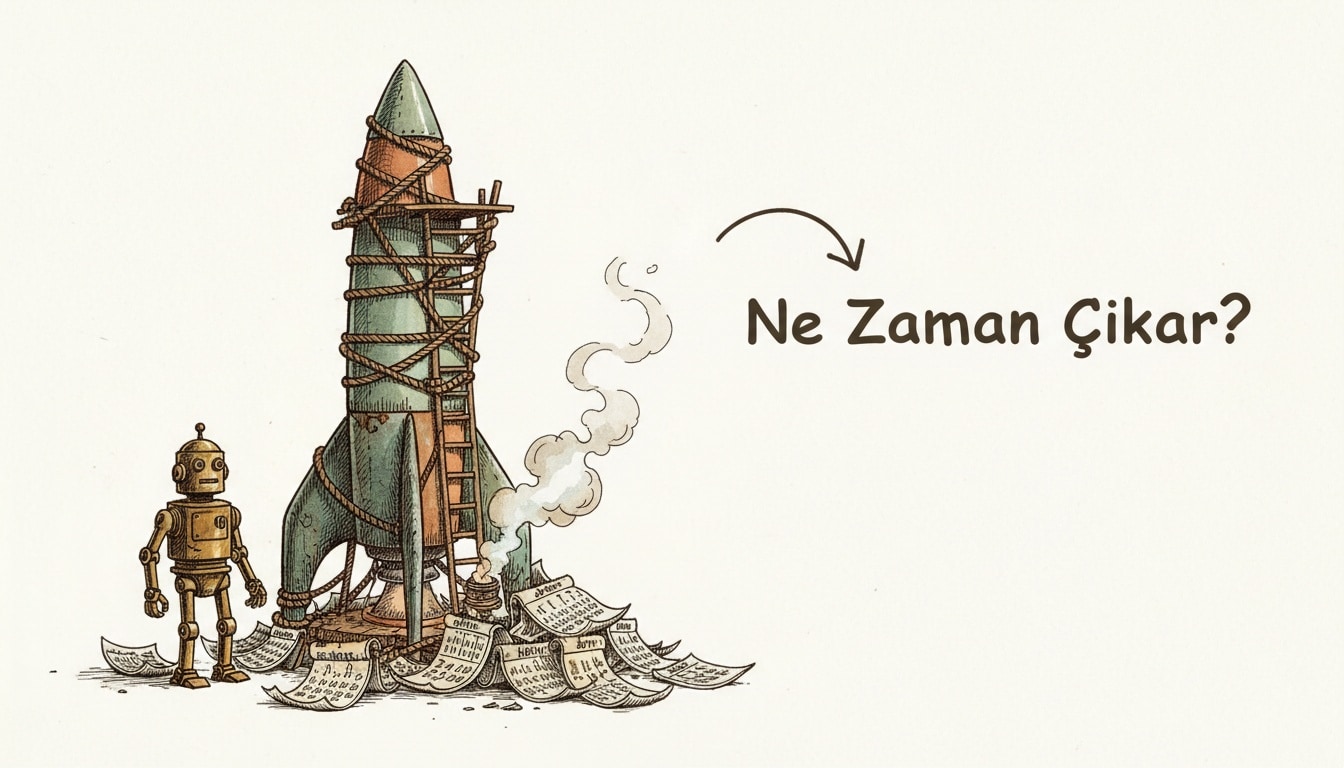
No, Gemini 3.5 Pro is not out yet. Google DeepMind has now missed three consecutive launch deadlines, most recently July 17, 2026, and there is still no public release date, pricing, or benchmark data. If you're deciding what to build on this week, the practical answer is Gemini 3.5 Flash.
Three Misses in a Row: The Delay Timeline
The story starts in May, right after Sundar Pichai's Google I/O keynote, where Gemini 3.5 Pro was teased as coming "next month." It never showed up on schedule. According to 9to5Google's reporting, the pattern has repeated three times now:
Date | Expectation | Outcome |
|---|---|---|
May 19, 2026 | "Next month" promise after I/O keynote | June target set |
June 2026 | First official launch window | Slipped to July |
July 17, 2026 | Second official launch date | Date passed, no launch |
July 18–19, 2026 | No public date announced | Google silent, stopgap Flash models spotted in registrations |
Three consecutive misses is unusual even by frontier-lab standards. Most vendors handle slippage quietly, letting a "coming soon" window drift without ever setting a hard date twice. Missing two separate, publicly implied dates back to back is what pushed this from routine delay to a story the press and prediction markets are now actively tracking.
What's Actually Happening Behind the Scenes
Per TechTimes' reporting, the root cause is not cosmetic — it's structural. The rebuilt model is still failing Google's internal reliability standards: frequent hallucinations, inconsistent outputs across repeated runs, and coding benchmarks that reportedly fell short of GPT-5.6.
In late June, Google updated the model's training data specifically to improve coding capability. The results were described as disappointing, and that failure is part of why the July 17 date also slipped. More strikingly, Google reportedly scrapped a base model that was near-ready and ordered a full ground-up pre-training restart on a native "Gemini 3" foundation. The stated reason: structural failures in recursive tool-calling and SVG/image generation that fine-tuning alone couldn't fix.
That's not a scheduling problem. It's an admission that the underlying architecture couldn't be patched into the quality bar Google wanted.
The Talent-Departure Shadow
It would be a stretch to call the researcher exodus the direct cause of the delay, but it's relevant context that shouldn't be skipped. In mid-to-late June 2026, Google DeepMind lost several senior researchers in a short span. Noam Shazeer, a Gemini co-lead and co-inventor of the Transformer architecture behind "Attention Is All You Need," left for OpenAI. Nobel laureate John Jumper, who led the AlphaFold project, departed for Anthropic.
Per Fortune's coverage, Alphabet shares fell roughly 5–6% around June 22, 2026 amid market concern about AI talent retention and spending discipline. Axios reported that some outlets have since tied a larger cumulative market-cap hit — reported around $225B — to the combination of the departures and the ongoing model-delay saga. Treat that figure as reporting, not an official Alphabet disclosure.
Losing senior architects doesn't automatically stall a model, but it can erode institutional memory and slow decision-making at exactly the moment a team needs to move fast on a hard reset. The timing overlap is, at minimum, worth flagging.
The Stopgap: A Growing Flash Family
While Pro sits in limbo, Google is filling the gap with interim releases. Registrations were spotted for models named "Gemini 3.6 Flash" and "Gemini 3.5 Flash Light." The strategy is transparent: keep shipping fast, cheap, good-enough models while the flagship matures behind the scenes.
This mirrors a pattern we've covered before in Gemini vs. ChatGPT: Which Should You Use in 2026? — most day-to-day workloads don't actually need the "smartest" model available, they need a fast, predictable one that doesn't break your budget.
What Prediction Markets Say
As of mid-to-late July 2026, prediction markets are hedging too. One market prices roughly an 81% probability that Pro ships by July 31. Another shows "August 7" as the leading outcome at 73%. Even market participants aren't betting heavily on Google hitting its own next target — understandable after three missed dates in a row.
What to Build On Right Now
If you're making near-term shipping decisions, the practical guidance is straightforward: don't make Gemini 3.5 Pro a hard dependency for your release plans. As we cover in our frontier model comparison, competing models kept moving while Pro sat stalled.
Scenario | Recommended now | Why |
|---|---|---|
General-purpose production workloads | Gemini 3.5 Flash | Proven quality/cost/latency tradeoff, available today |
Heavy coding tasks | GPT-5.6 or Claude Sonnet 5 | Gemini 3.5 Pro's coding benchmarks still trail |
Experimental or research projects | Don't wait for Pro, pick today's best fit | Roadmapping against a dateless release is a real risk |
Cost-sensitive applications | Gemini 3.6 Flash / Flash Light (once released) | Interim models exist specifically for this gap |
My honest take: three quiet, back-to-back delays are a bigger signal than any single missed date. The frontier-model race is shifting from "who ships the flashiest demo" to "who can actually clear an internal reliability bar before shipping." Scrapping a near-ready model for a ground-up restart suggests Google set a genuinely high bar this time — which is a good sign long-term, but it also means anyone who built a roadmap around a Pro release date has been burned twice already. That's a vendor-lock-in risk worth internalizing: build against models you can ship today, and treat unreleased flagship models as upside, not a dependency.
Pinning the exact model version in your API calls is a cheap habit that pays off during periods like this:
{
  "model": "gemini-3-5-flash-20260615",
  "fallback_model": "gemini-3-5-flash"
}
That way, if Google swaps model weights behind a stable alias, your production behavior doesn't shift unexpectedly underneath you.
For more on the broader model landscape, browse our AI category, or see how other vendors are responding to agent-reliability pressure in Claude Code Adds Guardrails Against Runaway Agents.
Frequently Asked Questions
When will Gemini 3.5 Pro launch?
Google hasn't announced an official date. Prediction markets currently point to a July 31–August 7, 2026 window as most likely, but given three consecutive missed deadlines, treat any forecast with caution.
Why is Gemini 3.5 Pro delayed?
The reported root cause is that the rebuilt model keeps failing Google's internal reliability standards — frequent hallucinations, inconsistent outputs, and coding benchmarks that reportedly trail GPT-5.6. Google is now retraining the model from scratch on a native "Gemini 3" foundation rather than patching the existing base.
What should I build on instead while I wait?
Gemini 3.5 Flash is a solid production option if it meets your quality, latency, and cost bar. For heavy coding workloads, GPT-5.6 and Claude Sonnet 5 are reasonable alternatives. Avoid making Gemini 3.5 Pro a hard dependency for near-term release plans.
Are the DeepMind researcher departures the reason for the delay?
Not directly confirmed. Noam Shazeer and John Jumper's departures overlapped in timing with the delay and rattled markets, but Google hasn't officially linked the two. It's best understood as compounding context rather than a stated cause.