@ahmetcantryk
A few years ago we used to ask, "What could one person really build in a weekend?" In 2026 that question sounds quaint. AI has made writing code, designing interfaces, and even refereeing a game's rules so cheap that a single developer can now stand up in days what a garage team once spent months on. This post rounds up products that genuinely caught attention over the past year, most of them built by one person or a tiny team with heavy help from AI. Some produced million-dollar exits; others simply became the internet's most fun corner. What they share: they're free or cheap to try, and their stories are worth telling.
For the wider landscape, check out the most popular AI tools in 2026. This list is different — not the big players, but scrappy projects made by people working mostly alone.
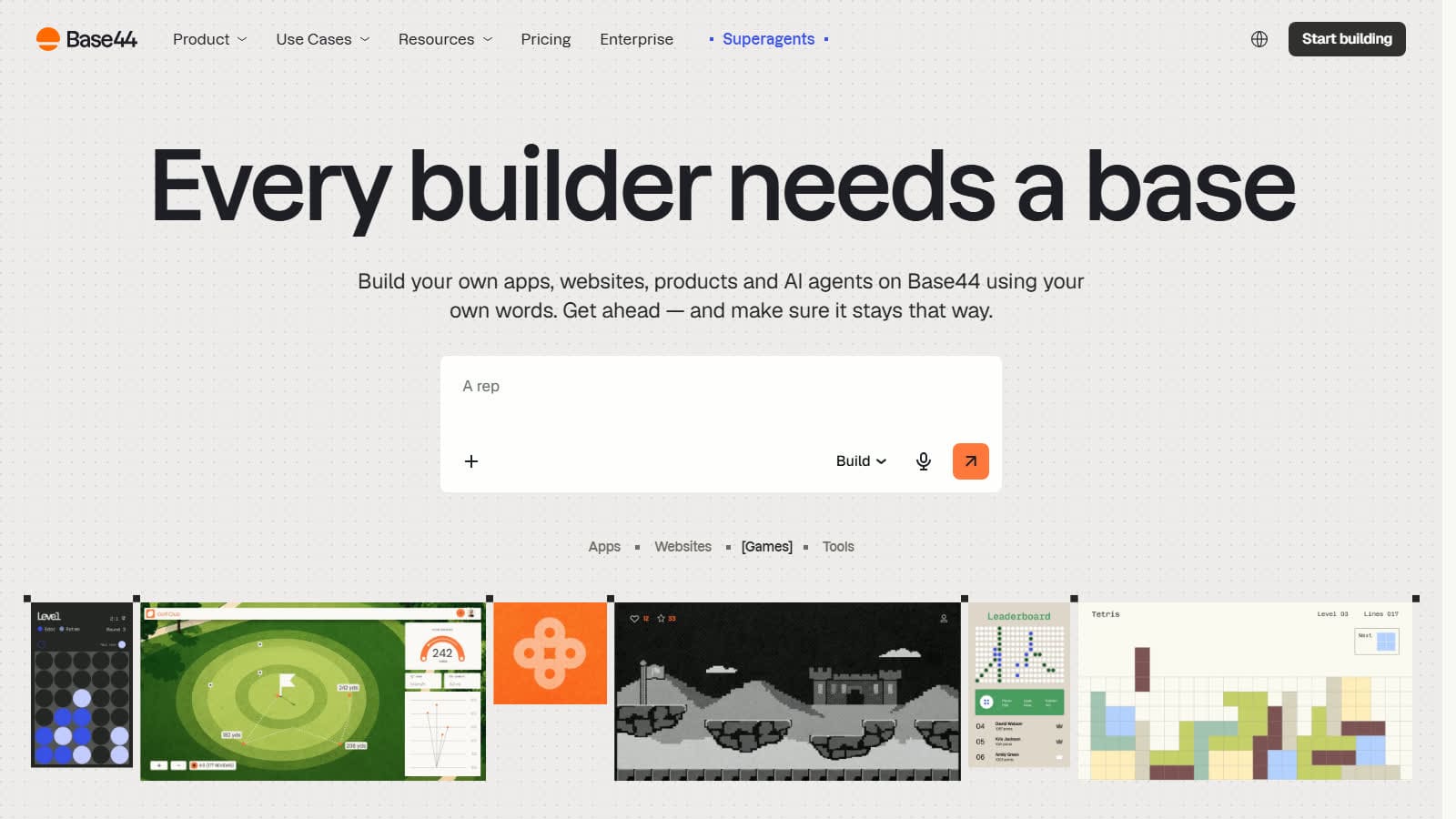
Base44: The $80M solo story built in six months
The undisputed star of this list is Base44. Israeli developer Maor Shlomo built a no-code app builder powered by "vibe coding" — describing an app in plain language and letting AI assemble it — largely by himself in early 2025. The result reads like a fairy tale: $1 million in annual revenue three weeks after launch, more than 250,000 users within six months, and finally an acquisition by Wix for $80 million in cash.
The most striking detail is that Shlomo pulled this off mostly solo, without a dollar of outside funding, while his country was at war. He hired his first employee just a month and a half before the sale. Base44's story is proof that "the one-person company built with AI" is no longer a slogan but a real business model. As he tells it, the hardest part wasn't technical — it was loneliness. If you're curious about the plain-language build approach, spec-driven development and the end of vibe coding maps out its limits well.
Goblin Tools: A public service born from a ChatGPT experiment
Not every project chases millions. Belgian AI engineer Bram De Buyser watched friends with ADHD and autism struggle with everyday planning, so he built a small ChatGPT demo: a "Magic ToDo" that breaks a giant task into tiny steps with one click. The response was so strong that the demo grew into Goblin Tools, a suite of small, single-purpose utilities.
Today Goblin Tools includes the "Magic ToDo" that splits a task into subtasks, a "Formalizer" that rewrites your text into a more (or less) formal tone, and a "Judge" that reads the emotional tone of a message. It's all free, the interface is minimal, and the philosophy is clear: unfussy tools that genuinely help neurodivergent brains. It's one of the best examples of a single engineer spotting a social need and turning it into a practical AI solution.
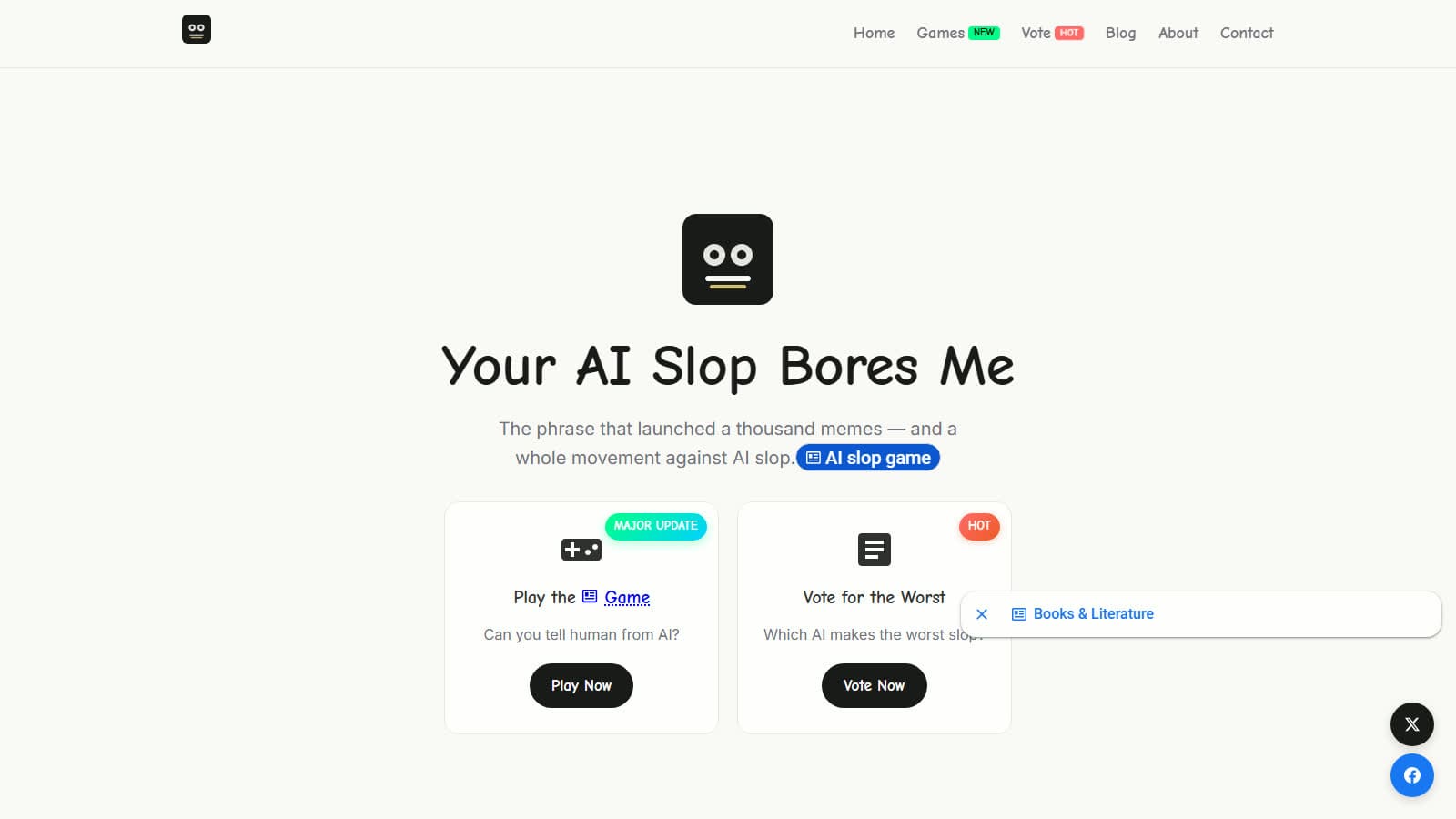
Your AI Slop Bores Me: The viral game where humans imitate AI
This is 2026's most delightful role reversal. A developer named Mihir Maroju (a.k.a. mikidoodle) posted Your AI Slop Bores Me as a "Show HN" on Hacker News in March 2026, and it went viral almost instantly. The concept is brilliantly simple: real humans pretend to be an AI chatbot and answer other real humans' prompts. A text box, a drawing canvas, and a 60-second timer.
The twist is the whole point: unlike AI's polished-but-predictable answers, you never know what a human will type. The game is a witty reply to "AI slop" fatigue. Put humans back in the machine's seat and you get exactly the unpredictable, weird, funny energy the internet has been missing.
Death by AI: A survival party refereed by AI
Cut from the same cloth is Death by AI, built by BobboDev — a Jackbox-style party game you play with friends in the browser or on mobile. The setup: players get a lethal, absurd scenario ("a giant octopus is storming the city, what do you do?") and everyone writes a tweet-length survival plan. Then an AI judge rules on each plan, delivering a "SURVIVED" or "PERISHED" verdict with a funny narrative twist.
Playable by up to 10 people, it fuses creative problem-solving, dark humor, and the unpredictability of AI decisions. Under the hood it runs a language model (GPT, Claude, or similar) with a structured prompt that packs in scenario context and the player's action. Technically it's the LLM mechanics we all know — but drop them inside a game and you get a completely different, laughter-filled experience. If you'd like to build something like this, AI project ideas for a weekend is a good starting point.
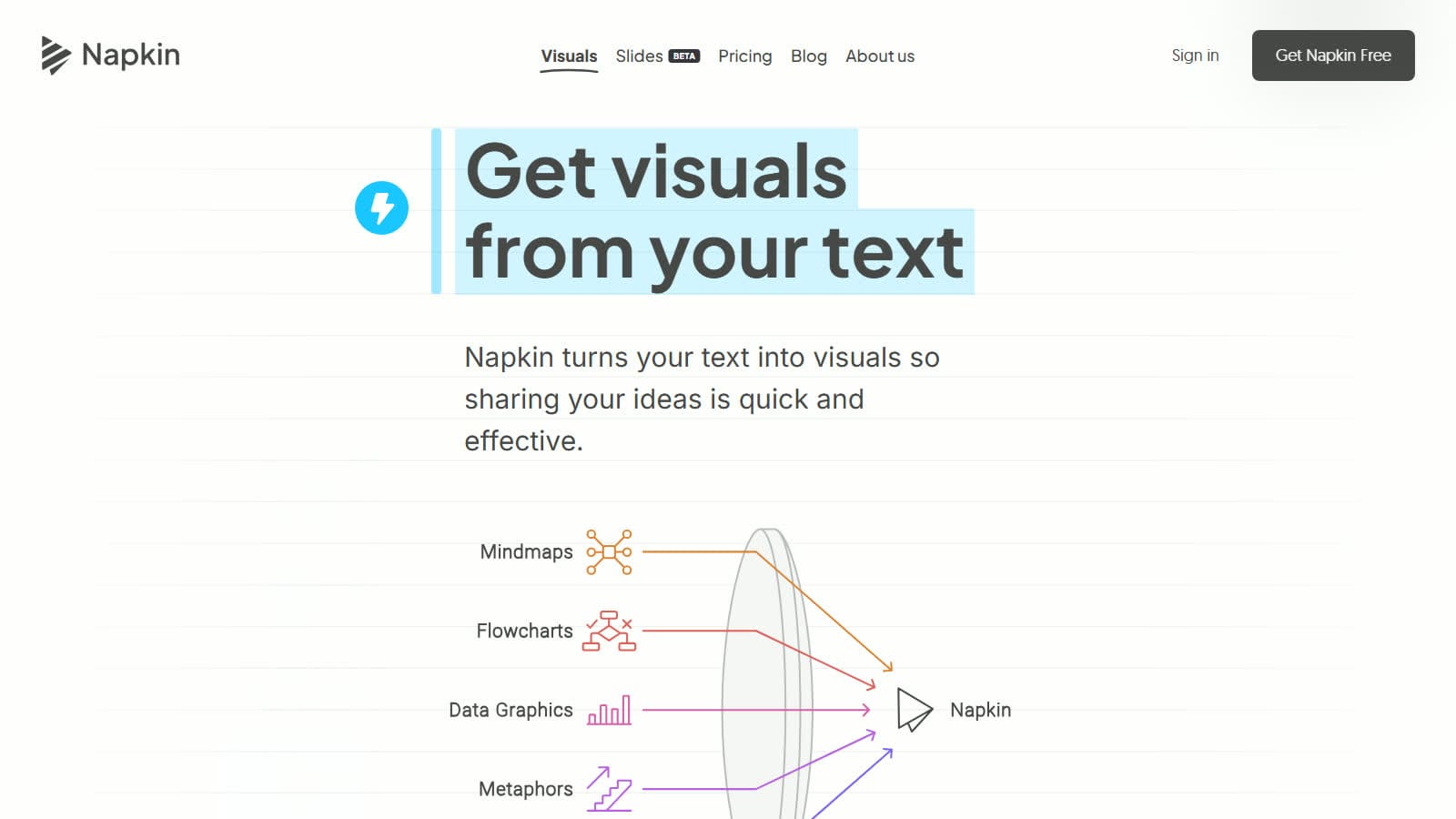
Napkin: Turning your text into diagrams in seconds
Not everyone loves writing prompts; some people just want to visualize an idea. Napkin is built for exactly that: paste text or notes and it generates flowcharts, mind maps, and infographics for you. You don't even write a single prompt — the AI reads the structure of your text and suggests the most fitting visual.
Napkin's beauty is that it solves the biggest headache for anyone making slides or blog posts: the "I can explain it but I can't draw it" problem. Outputs are editable, so you can pull them into your brand colors and style. For turning meeting notes, lecture summaries, or product ideas into visuals fast, it's a real time-saver.
Descript: Editing video as if it were text
Descript remains one of the most beloved AI-assisted tools because it drops video editing down to the level of "editing text." You upload a video, the AI transcribes the speech, and from then on you edit the video like a Word document. Delete a sentence from the transcript and the matching video clip disappears too; filler words like "um" and "uh" can be cleared in one click.
For podcasters, YouTubers, and course creators, Descript turns hours of timeline wrangling into minutes. It also has features like fixing words you stumbled over on camera or cloning your voice to re-read a line. The fact that someone with zero editing experience can produce professional-looking content explains why the tool is so widely loved.
Recraft: A design tool that generates real vectors
Most image generators hand you a pixel-based PNG. Recraft sets itself apart here: it can generate real SVG vectors — outputs you can open in Illustrator or Figma, scale infinitely, and send to print (CMYK included). For designers making logos, icon sets, and illustrations, that's the difference between a fun toy and a working tool.
Recraft also stands out for building a consistent style library so every asset comes out in the same aesthetic. For small teams that need to protect a brand identity, that's serious leverage. If image generation is your thing, the best AI image generators in 2026 comparison is a good companion read.
The lesson across these projects
These seven examples look wildly different, yet they tell one story. Base44 is a business model, Goblin Tools a public service, Your AI Slop Bores Me and Death by AI are entertainment, and Napkin, Descript, and Recraft are productivity tools. The common thread: AI has lowered the "can you build it" bar so far that the real differentiator is now the idea and the ability to notice a need. A sharp observation, the right problem, and a few days of brave experimentation can reach millions today.
Product | What it does | Standout detail |
|---|---|---|
Base44 | Build apps in plain language | $80M exit in 6 months |
Goblin Tools | Neurodivergent task tools | Completely free |
Your AI Slop Bores Me | Game where humans imitate AI | Went viral on HN |
Death by AI | AI-judged survival game | Up to 10 players |
Napkin | Text to diagrams | No prompt needed |
Descript | Edit video with text | Filler-word cleanup |
Recraft | Real SVG vector generation | Print-ready output |
Frequently Asked Questions
Are these products free to try?
Most have a free tier. Goblin Tools and the two games (Your AI Slop Bores Me, Death by AI) are entirely free. Napkin, Descript, and Recraft offer a free starter plan, with paid plans for advanced features. Base44 now lives under the Wix umbrella following its acquisition.
Can one person really build products like these?
Yes, and Base44 is the clearest proof. Because AI accelerates code, design, and content generation, a single developer can now do work that required a team a few years ago. That said, distribution, support, and growth still demand real effort — the magic is only in the "building" part.
Where should I start my own AI project?
Start with a small, clear problem, just as Goblin Tools grew from a single "break this task down" need. Ship a demo that works in a weekend, show it to real users, and grow it based on feedback. Browse our weekend project ideas for inspiration.
What is "vibe coding"?
Vibe coding means describing what you want to an AI in plain language and letting it assemble the app, instead of writing code line by line. Tools like Base44 work this way. It's great for rapid prototyping, but production scale still needs engineering discipline for security and maintenance.