@ahmetcantryk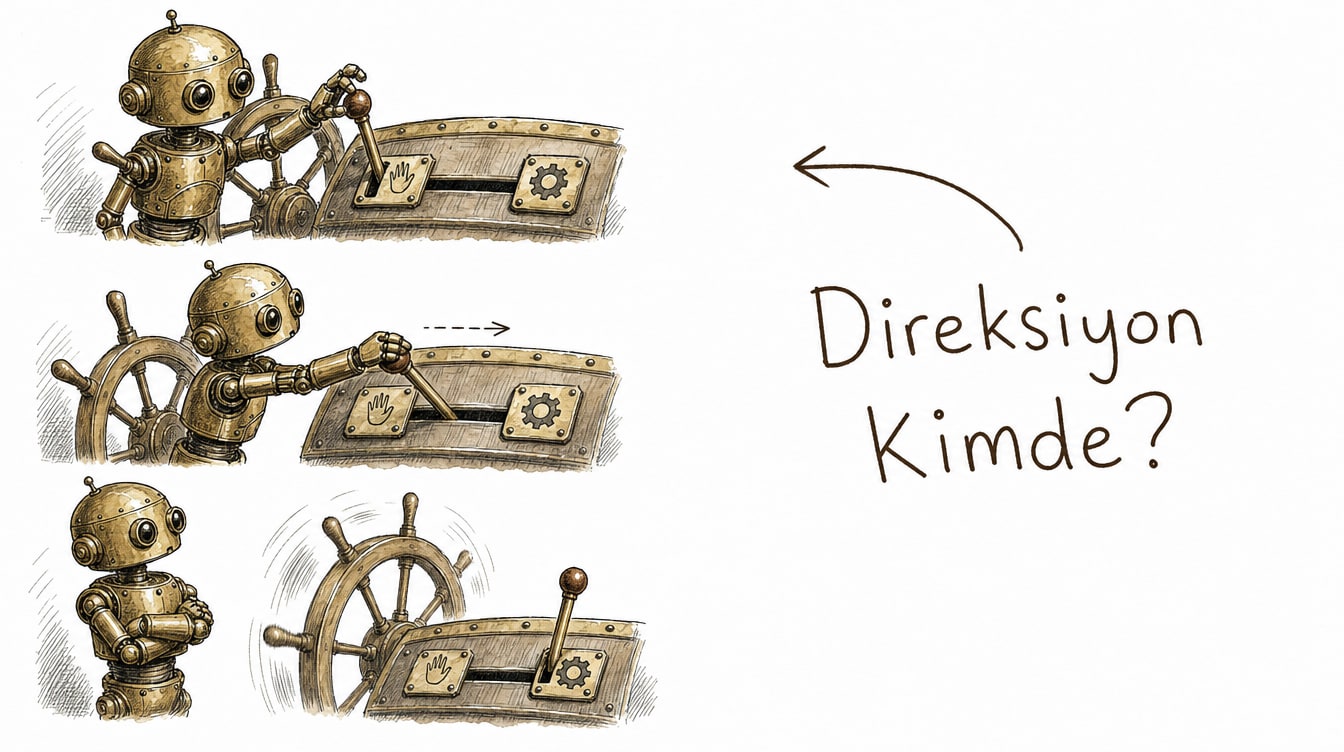
Starting August 14, 2026, auto mode becomes the default permission mode for new Claude Code sessions on Pro, Max, and Team plans. Anthropic announced the change in its Claude Code "Week 32" digest, covering August 3–7. In practice, that means the background classifier that already auto-approves safe tool calls — instead of prompting for permission on every action — is about to become what you get out of the box.
What Auto Mode Actually Does, Briefly
Auto mode replaces the classic loop of stopping before every file write or shell command and waiting for a click with a classifier that evaluates context, blocks destructive or externally aimed actions, and lets everything else through without a human in the loop. We covered the mechanics in depth in our earlier explainer on how auto mode works; this piece is not that article. It is about what changes on August 14 and the safety debate that comes with flipping the default.
What Changes on August 14, and What Doesn't
The rollout is not universal. If you already set a personal default permission mode, that choice sticks — nothing changes unless you accept a one-time switch prompt. Organization-managed defaults set by an admin are untouched as well.
Scope | After August 14 |
|---|---|
Pro / Max / Team, new session, no prior setting | Defaults to auto mode |
Pro / Max / Team, personal default already set | Unchanged (switch prompt is optional) |
Organization-managed default mode | Unchanged |
Enterprise, API, Bedrock, Vertex/Google Cloud Agent Platform, Microsoft Foundry | Still opt-in, default unchanged |
Enterprise and API deployments staying opt-in is worth noting. Anthropic pushing the broader default rollout to a later date suggests a higher bar for caution once shared, multi-team configurations are involved — a mismatched default costs a lot more there than it does for a single developer on Pro.
This Isn't a Sudden Flip
Taken on its own, August 14 can look like a big leap. Zoomed out, it's the latest step in a rollout that has been running for months. Auto mode launched as a research preview in March 2026, reached the Pro plan in May 2026, and picked up hardening throughout the summer — blocking destructive git commands and asking before rm -rf on unresolved variables were both added during that stretch. By July 2026, it no longer required an opt-in step on Bedrock, Google Cloud Agent Platform, or Microsoft Foundry. August 14 is the next increment in that progression, not a decision made overnight.
One more practical detail rolled out alongside the default switch: classifier calls no longer count toward usage limits. Auto mode's background evaluation step doesn't eat into your quota, which removes a source of friction for teams that were already leaning toward automation.
The gradual pacing also means each step has been hardened against real production incidents rather than lab conditions alone. The destructive-git-command blocking and the rm -rf confirmation behavior both came out of patterns Anthropic saw in actual usage, not synthetic testing. That gives the classifier going into the August 14 default a meaningfully more mature footing than the one that shipped as a research preview five months earlier.
The Safety Debate: What the Numbers Say
This is the most contested part of the news: whether auto-approval is actually safer than a human clicking "allow." In Anthropic's own red-team-style stress test, the classifier caught 937 of 1,053 planted dangerous commands — roughly an 89% catch rate, or an 11% miss rate. Paid human testers reviewing the exact same prompts caught only 143 of 1,053, a catch rate of about 13.6%.
Read in isolation, an 11% miss rate on dangerous commands sounds alarming — it's the number Techi's coverage of the rollout leads with. Read comparatively, the picture flips: human reviewers missed more than 86% of the same planted commands. After further hardening, the miss rate on synthetic and adversarial test sets dropped to roughly 7%. On real production traffic, Anthropic reports approximately a 0.4% false-positive rate (safe commands blocked unnecessarily) and a 17% false-negative rate (risky commands that slipped through).
Test Environment | Miss Rate |
|---|---|
Initial stress test (synthetic) | ~11% |
After hardening (synthetic/adversarial) | ~7% |
Real production traffic | ~17% |
The production false-negative rate coming in higher than the synthetic test result is a reminder that real usage is messier and more varied than a lab benchmark — which lines up with what Anthropic itself says explicitly: auto mode "does not eliminate risk." The classifier is a filter tuned to catch irreversible, destructive, or externally aimed actions, not a correctness guarantee or a substitute for human judgment on high-stakes changes.
My own read: making auto-approval the default is a reasonable bet given a classifier that beats human reviewers by a wide margin on the same test set — that's a clear net win for most individual developers and small teams. But for teams under compliance obligations, working in regulated industries, or touching shared production environments, "better than average" isn't the bar that matters; those teams should keep pinning manual approval on purpose. Our guardrails for runaway agents piece covers why that kind of safety net shouldn't rest on a classifier alone.
For Teams That Want to Pin Manual Approval
If you want to opt into auto mode as the default before August 14 — or pin manual approval permanently instead — the setting lives in ~/.claude/settings.json:
{
  "permissions": {
    "defaultMode": "auto"
  }
}
Setting defaultMode to "manual" locks in the opposite behavior. Organization admins can apply the same setting as a centralized policy that overrides individual preference; the permission modes documentation lays out the requirements and controls in detail. Knowing which side of this setting you're on matters most in workflows built around subagents and background agents, where clicking "allow" on every action already stopped being practical once several agents run in parallel.
The decision comes down to a simple equation. If you're fine with the speed gains automation brings, there's nothing to do on August 14 — the switch happens on its own. If you want to keep manual approval, you need to pin the setting explicitly before that date; waiting on the default to change for you is the riskier move.
Frequently Asked Questions
How do I turn off auto mode?
Set permissions.defaultMode to "manual" in ~/.claude/settings.json. If your organization manages a default centrally, that change needs to happen at the admin level instead.
Does this affect Enterprise or API users?
Not yet. Enterprise, API, and major cloud integrations like Bedrock, Vertex AI, and Microsoft Foundry remain opt-in; Anthropic is holding off on a broader default rollout there for now.
Is auto mode actually safe?
It's not a guarantee, but it measurably outperforms human review. After hardening, the miss rate on synthetic tests drops to roughly 7%, and the false-negative rate on production traffic runs around 17%. Anthropic is explicit that this reduces risk rather than eliminating it.
Will my existing permission mode setting get overwritten?
No. If you already set a personal default, it stays in place unless you accept a one-time prompt to switch. Organization-managed defaults are unaffected by this rollout as well.