@ahmetcantryk
A repeatable SEO writing system with Claude turns keyword and intent research into a fixed brief template, drafts in an answer-first structure, runs through a human editing pass, keeps internal links and entities consistent, and measures whether the piece actually gets extracted into AI answers, not just where it ranks. The goal is not one good article; it's a pipeline that produces the same quality every time.
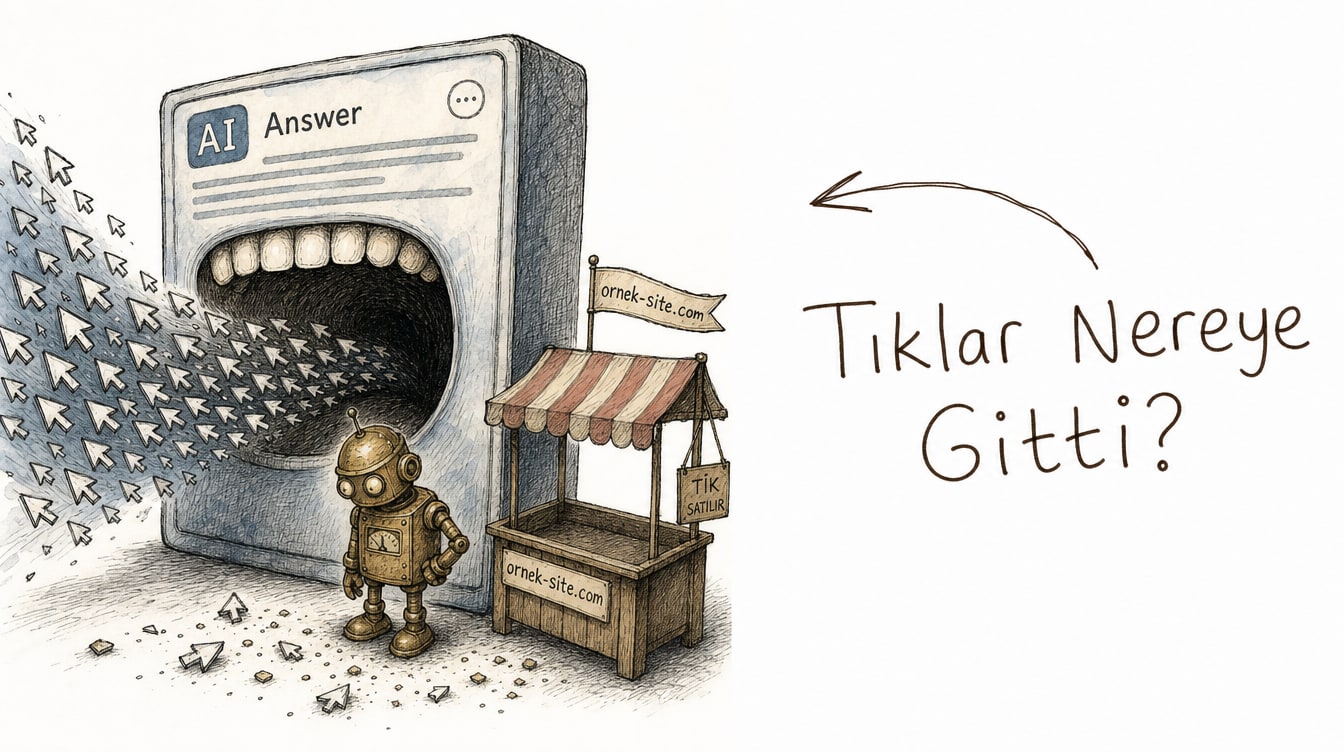
By mid-2026 the data backs up why this matters more than it used to. SparkToro's 2026 analysis of Similarweb clickstream data found that roughly 68% of US Google searches now end without a click to any website, up from around 60% in 2024 (Search Engine Land's coverage, SparkToro's original analysis). AI Overviews now appear on more than 20% of Google searches, and when they do, about 83% of those searches also end without a click. Ranking first is no longer the finish line — being the source an AI answer actually pulls from matters just as much.
Turning Keyword and Intent Research into a Reusable Brief Template
Instead of an open-ended "let's research this" session before every article, a brief template with fixed fields makes both Claude's output and the editor's job predictable. Design the template once, and filling it in for a new topic becomes a repeatable step rather than a fresh decision each time.
Field | Contains | Why It Matters |
|---|---|---|
Target query | Primary keyword plus two to three close variants | Anchors titles and H2s |
Search intent | Informational / comparison / transactional | Determines format: list, table, step-by-step |
Entities to cover | Product names, technical terms, competing concepts | Strengthens topical authority and AI extraction |
Competing pages | Gaps in the top three to five ranking results | Defines the differentiation angle |
Internal-link targets | Three to six existing posts to link to | Plans the internal authority flow |
Answer-first summary | Draft 40–60 word definition or answer | Ready-made core for snippets and AI Overviews |
A prompt like this fills the template usefully: "Fill in this brief: target query is '[X]', summarize what the current top-ranking pages cover, list which entities they leave out, and draft a 40–60 word answer-first summary." Claude isn't doing live research here — it's structuring raw material (SERP titles, competitor summaries) you feed it, acting as an editor rather than a search engine.
Answer-First Structure: A Direct Answer in the First 40–60 Words
Classic SEO snippets and AI Overviews extraction reward the same thing: a direct answer up front, with no throat-clearing. The opening paragraph should not promise "in this article we'll cover" — it should state the definition or answer outright, ideally in 40–60 words with a single clear claim.
We use a prompt like this: "Answer this headline in 40–60 words, starting with a definition sentence. Do not add any lead-in context — answer the question directly." Put that paragraph at the very top of the article, then expand into context, examples, and nuance below it. That structure satisfies the reader and the extraction algorithm at the same time.
Outline → Draft → Human Editing Pass
Once the brief is ready, we run a three-stage flow: outline, draft, and a human editing pass.
Stage | Claude's Role | Human's Role | Output |
|---|---|---|---|
Outline | Proposes an H2/H3 structure from the brief | Approves order and scope | Approved heading list |
Draft | Writes each section, staying true to the brief's entities | Adds real examples, numbers, insight | First full draft |
Editing | Applies requested fixes, checks consistency | Approves tone, accuracy, brand voice | Publish-ready copy |
For the outline: "Propose an H2/H3 heading structure from this brief, with a one-sentence summary of what goes under each heading." For the draft: "Write the [X] section of the outline using the entities from the brief, avoid unsupported claims, and use [company/product] name exactly as it appears in the brief." For the editing pass: "Review this draft against this checklist: repeated sentences, inconsistent terminology, unsupported claims. List suggested changes as bullet points — do not edit the text yourself." That last constraint matters: nothing gets rewritten in place until the editor sees and approves every change.
Internal Linking and Entity Consistency
Across an article set — say, one built on the logic of topical authority and content clusters — every article needs to use the same product name, the same technical term, the same brand phrasing. Rather than tracking this by hand, we treat the "entities to cover" field in the brief as a reference glossary and give Claude a prompt like: "Check whether the product, brand, and term names in this draft match the reference list in the brief, and flag any inconsistencies."
Deciding internal-link targets in the brief, before drafting starts, also beats scanning a finished draft for "where should this link go." Marking which paragraphs will link to, for example, prompt engineering patterns or Claude Skills explained at the brief stage makes it easier to place links in context without disrupting the draft's flow later.
Measuring What Ships: Beyond Rankings
Judging an article by ranking alone is an incomplete picture of the 2026 search landscape. As HubSpot's 2026 coverage of answer engine optimization points out, tracking AI visibility has become a standard part of SEO reporting rather than a niche add-on. We track four metrics: classic ranking and organic traffic, impression and click-through rate in Search Console, snippet capture rate (the "position 0"-style result), and, where possible, how often the brand shows up in AI answers (AI Overviews, chat assistants). The last two require manual tracking — periodically running target queries through AI search interfaces and noting whether your brand gets cited as a source isn't as precise as an automated tool, but it's enough to see the direction of travel.
In our experience, the biggest return on this system doesn't come from drafting speed — it comes from the brief template itself. Reusing the same template across every topic removes the need for the editor to make the same structural decisions from scratch each time, and it keeps a growing article set consistent almost automatically. Faster drafts are a side benefit; the real gain is a repeatable process.
Copy-Paste Prompt Templates
1) BUILD THE BRIEF
Fill in an SEO brief with this information:
Target query: [X]
Top-ranking competitor titles: [list]
Output: search intent, 5-8 entities/terms to cover,
2-3 gaps competitors leave open, a 40-60 word
answer-first summary, 3-6 suggested internal-link targets.

2) ANSWER-FIRST PARAGRAPH
Answer the question "[headline]" in 40-60 words.
Start with a direct definition/answer sentence, no
lead-in or context sentence. Use brand/product names
exactly as they appear in [the brief's entity list].

3) EDITING PASS
Review this draft against the following and output
ONLY a bullet list of suggestions — do not rewrite
the text yourself:
- Repeated or filler sentences
- Terminology inconsistent with the brief's entity list
- Claims made without evidence or a source
- Whether the answer-first paragraph exceeds 40-60 words
Frequently Asked Questions
Can I just tell Claude to "write an SEO-friendly article"?
You can, but the result tends to stay generic. Without a brief, Claude has no way of knowing which entities to cover, what gaps the competing pages leave open, or which internal links should take priority. The brief is what lets you make those calls and Claude execute them.
Do I need a separate strategy to show up in AI Overviews?
Not a separate strategy — it's a natural consequence of the same answer-first discipline. Content that opens with a clear definition, uses entities consistently, and is structured with tables and lists has an edge in both classic snippets and AI extraction, so you're not producing two different pieces of content.
Which field in the brief template makes the biggest difference?
In our experience, it's the "entities to cover" field. Without it, terminology drift across a growing article set is almost inevitable — the same product gets named differently in different posts — and that inconsistency hurts both reader trust and AI extraction quality.
Is this system worth setting up for a one-person content operation?
Yes. Even a solo writer saves time with a brief template, because it removes the need to re-decide the same structural questions on every article. The payoff compounds as a team grows, since the template forces different writers' output into the same mold.