@ahmetcantryk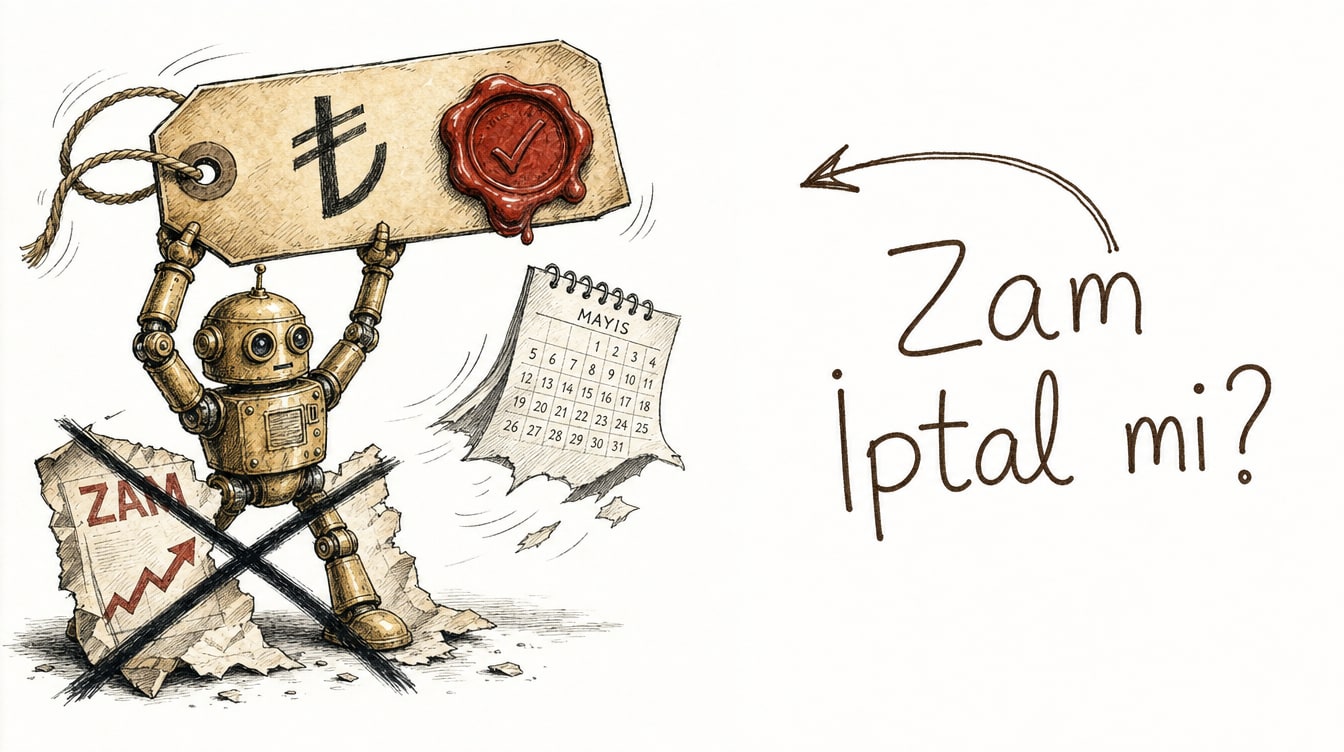
On August 10–11, 2026, Anthropic made Claude Sonnet 5's introductory API pricing permanent: $2 per million input tokens (MTok) and $10/MTok output. This cancels a previously scheduled 50% increase to $3/$15 that was set to take effect September 1, 2026. Nothing changes in your integration; what changes is how you should model your bill going forward.
What happened and why it matters
Sonnet 5 launched with $2/$10 pricing explicitly labeled as introductory, "through August 31, 2026." Teams planning budgets into Q4 had been penciling in $3/$15 starting September 1 — for some workloads, that jump would have meaningfully moved the monthly line item. Anthropic's own pricing documentation now carries this note:
"The $2/$10 per million input/output token pricing for Claude Sonnet 5, announced at launch as introductory pricing through August 31, 2026, is now the standard price. The previously scheduled increase to $3/$15 per million input/output tokens on September 1, 2026 will not occur."
In practice, the hike is off. No action is required in your integration — you can delete the "$3/$15 starting Sept 1" line from your forecast spreadsheet.
Worth noting: Sonnet 5 was already cheaper than the previous generation, Claude Sonnet 4.6, which runs $3/MTok input and $15/MTok output. Even if the canceled hike had gone through, the two models would have landed close to parity. Now Sonnet 5 stays both more capable and meaningfully cheaper — at least on the headline numbers.
The tokenizer catch behind the "generosity"
Here is where the story gets less generous. Claude 4.7-and-later models, Sonnet 5 included, use a newer tokenizer that produces roughly 30% more tokens for the same text compared to Sonnet 4.6 and earlier models. So while the per-token price dropped, the number of tokens you burn to do the same work went up — the real cost-per-word improvement is smaller than the sticker price suggests.
That gap is worth being a little skeptical about. As of August 2026, frontier pricing is in open competition: OpenAI's GPT-5.6 family reached general availability in July, Google's Gemini 3 Pro sits in a similar price band, and Anthropic has reported IPO plans in the background. Locking in Sonnet 5's price reads less like pure generosity and more like a defensive move against that competitive pressure — once you account for the tokenizer inflation, the discount Anthropic is actually handing out is smaller than the headline implies.
Anthropic hasn't publicly explained the reasoning; the change appeared as a quiet note in the pricing docs. But the timing lines up with growing enterprise scrutiny of AI infrastructure spend and a rival announcing a price cut seemingly every few weeks. Canceling a scheduled hike in that environment is a low-cost way to avoid churn, not necessarily a sign of newfound generosity.
Pricing comparison
Model | Input ($/MTok) | Output ($/MTok) |
|---|---|---|
Claude Sonnet 5 | $2 | $10 |
Claude Sonnet 4.6 | $3 | $15 |
GPT-5.6 Sol | $5 | $30 |
GPT-5.6 Terra | $2.50 | $15 |
GPT-5.6 Luna | $1 | $6 |
Gemini 3 Pro | ~$2 | ~$12 |
Gemini 3.6 Flash | lower (high-volume tier) | lower (high-volume tier) |
Sonnet 5 is also available via the Batch API at a 50% discount — $1/MTok input, $5/MTok output. Prompt caching adds its own multipliers on top of the base input price: a 5-minute cache write costs 1.25x, a 1-hour cache write costs 2x, and a cache read (hit) costs just 0.1x. For teams running agentic workloads with repeated system prompts, caching strategy can move your bill more than the headline per-token price does.
Re-run your cost model with real token counts
A quick script makes the tokenizer effect concrete:
# Naive assumption: apply Sonnet 5 pricing to Sonnet 4.6 token counts
words_per_month = 50_000_000
tokens_per_word_old = 1.3          # Sonnet 4.6 tokenizer
tokens_per_word_new = 1.3 * 1.30   # Sonnet 5: ~30% more tokens per word

old_price_in, old_price_out = 3.0, 15.0   # Sonnet 4.6, $/MTok
new_price_in, new_price_out = 2.0, 10.0   # Sonnet 5, $/MTok

def monthly_cost(tokens_per_word, price_in, price_out, input_ratio=0.6):
    tokens = words_per_month * tokens_per_word
    in_tokens, out_tokens = tokens * input_ratio, tokens * (1 - input_ratio)
    return (in_tokens / 1e6) * price_in + (out_tokens / 1e6) * price_out

old_cost = monthly_cost(tokens_per_word_old, old_price_in, old_price_out)
new_cost = monthly_cost(tokens_per_word_new, new_price_in, new_price_out)

print(f"Sonnet 4.6 estimate: ${old_cost:,.0f}")
print(f"Sonnet 5 with real token counts: ${new_cost:,.0f}")
print(f"Actual savings: {(1 - new_cost / old_cost) * 100:.1f}%")
The gap between the savings percentage you'd get from comparing sticker prices and the one you get from this script is exactly the 30% tokenizer inflation. Teams running long system prompts and large context windows will see that gap show up as a real, visible deviation in the monthly invoice.
What to do now
Short answer: nothing structural. No migration is needed, your API key and integration code stay exactly as they are. What is worth doing is re-running your cost model against actual token logs instead of trusting the advertised $/MTok figure alone. If you have async jobs that can move to the Batch API, the 50% discount is worth evaluating, and if your workload repeats system prompts, test prompt caching explicitly — a high cache-hit rate can push your effective bill well below the headline price.
If you're still deciding which model fits your workload, our guide to picking a Claude model in 2026 walks through the tradeoffs, and our Claude Opus 5 launch coverage is useful for top-end reasoning workloads. For a broader playbook on cutting token spend, see our guide to cutting LLM token costs. If you're following agentic coding workflows, Claude Code's auto mode becoming the default is worth a read, and if you want to see the tradeoffs play out in a real build, our piece on building a SaaS MVP with Claude Code in a weekend is a good companion. For more coverage like this, browse our AI category.
For the primary source, see Anthropic's official pricing documentation. The announcement was aggregated on Techmeme, and The Stack has a good breakdown of the competitive context behind the move.
Frequently Asked Questions
Is this pricing really permanent now?
Anthropic's own documentation explicitly calls $2/$10 the "standard price" and states the September 1 increase "will not occur." Anthropic could theoretically change pricing again in the future, but as of now $2/$10 carries the same status as any other standard, non-promotional API price.
How does the tokenizer change affect my bill?
Sonnet 5 splits the same text into roughly 30% more tokens than Sonnet 4.6 did. Because the per-token price dropped, your total cost is still usually lower, but not by as much as the sticker price implies. The only reliable way to know your real savings is to compare token counts from your actual logs, not word counts.
How does this compare to GPT-5.6 and Gemini pricing?
Sonnet 5 is cheaper than GPT-5.6 Sol and Terra but more expensive than GPT-5.6 Luna, and it sits close to Gemini 3 Pro (~$2/~$12). For high-volume, latency-tolerant workloads, it's worth benchmarking cheaper tiers like Gemini 3.6 Flash or GPT-5.6 Luna alongside Sonnet 5.
Do I need to change anything in my integration?
No. The API endpoint, model identifier, and pricing structure are unchanged — this is simply a previously temporary price becoming permanent. The only action item is removing the now-canceled September hike from your budget forecast.