@ahmetcantryk
Chasing every algorithm update is a losing game. Instagram now weighs watch time and like rate over older engagement signals, X rewards credibility over raw virality, and Facebook favors posts inside active Groups — and none of it holds still. The winning move is not chasing the platform; it is building a content system that survives whichever platform changes next.
Name the Algorithm Treadmill for What It Is
By 2026, nearly every major platform — TikTok, Instagram, YouTube, Facebook, X — has shifted its ranking logic from the follow graph toward the interest graph. Having followers no longer guarantees reach; every single video or post has to re-earn distribution through watch time, engagement velocity, and content-signal matching. Account size stopped being the deciding factor. Current performance is.
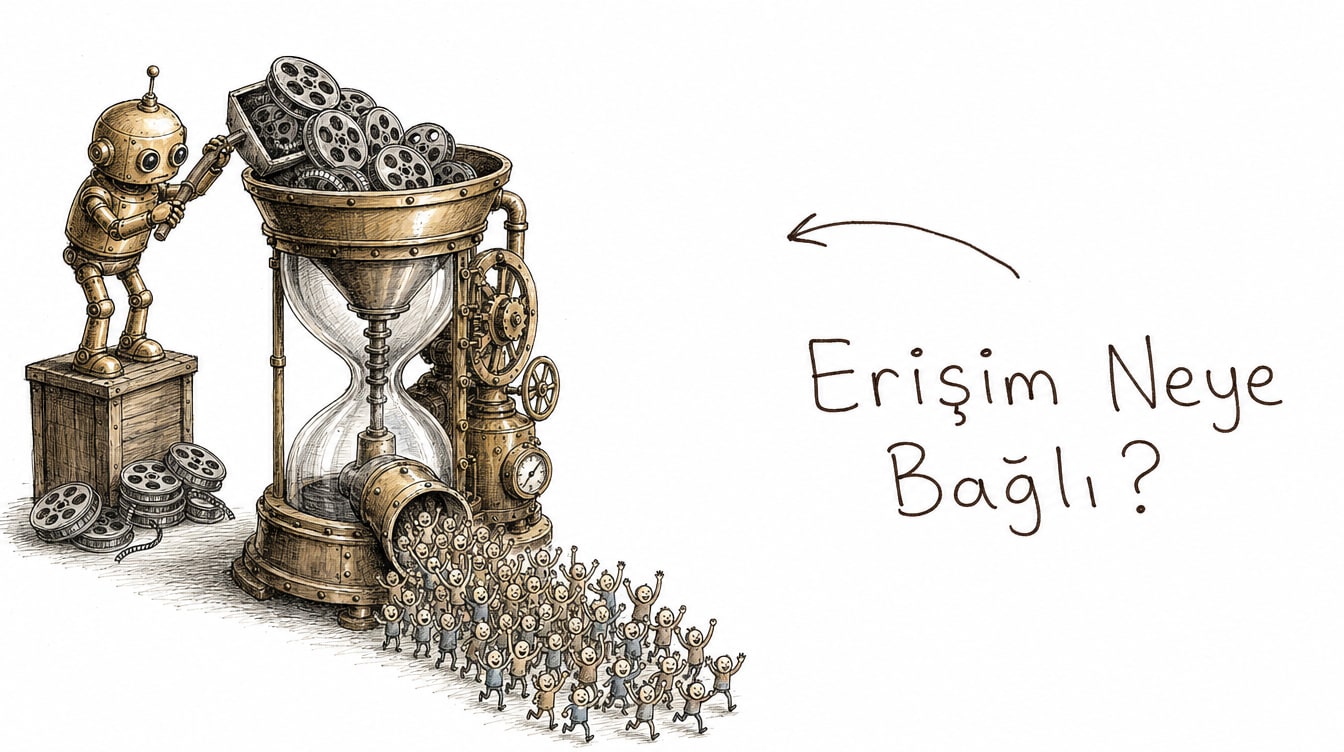
The practical consequence is blunt: creators and brands who built their whole strategy around gaming one platform's specific ranking quirks are exposed every time that platform changes its model. And platforms have been changing their models frequently through 2026, often without much warning. Call this the algorithm treadmill: you keep running, but you never arrive, because the finish line keeps moving. You learn a tactic, an update kills it, you learn the replacement, and three months later that one is gone too.
Getting off the treadmill does not mean running faster. It means building a system that does not depend on the treadmill at all. The rest of this piece covers four components of that system: owned channels, content value that travels, channel portfolio, and the right metrics.
Own the Audience: Email, Community, and Direct Channels
Social platforms are a discovery layer, not a relationship. A follower can lose reach overnight because of a single update; an email subscriber gets every message you send regardless of what the algorithm decides that week. That distinction became a strategic priority in 2026: treat social platforms as top-of-funnel discovery, and treat your newsletter, your community space, and — where relevant — direct SMS or push as the place where the actual relationship lives.
The newsletter deserves particular attention because it is both cheap and entirely under your control; our newsletter growth and monetization guide breaks down how to build and monetize that channel. A Discord-style community space does something different: it converts passive followers into active participants, and those participants tend to be the most loyal, highest-spending segment of an audience. Our piece on building community instead of chasing followers walks through that shift.
Here is the sharper claim: a social media following is not an asset anymore — it is a lease. You can grow it as large as you want, but the landlord — the platform — always reserves the right to change the terms. The only asset you actually own is the audience you can reach directly.
Formats That Travel vs. Content Built on a Loophole
Some content works no matter what a platform does: a strong hook, a genuinely useful specific insight, a clear payoff. Some content only works because it exploits one platform's current quirk — a specific video length, a specific hashtag behavior, a specific posting-time pattern. The first keeps its value when the algorithm changes. The second stops working overnight the moment an update lands.
The table below makes that split concrete.
Platform-Dependent Tactic | Algorithm-Resilient Alternative |
|---|---|
Forcing a specific video length (e.g., "exactly 7 seconds") | Letting the topic dictate length and prioritizing clarity |
Chasing a platform's temporary hashtag or trend pattern | Building topical authority that stays searchable over time |
Relying solely on posting-time optimization | Establishing a consistent cadence and a recognizable format |
Engineering content purely to bait one platform's comment mechanic | Producing content genuinely worth saving and sharing |
Writing headlines and thumbnails to game a ranking signal | Crafting an honest hook that triggers real curiosity |
According to StoryChief's 2026 algorithm report, the content formats that survive across platforms are the ones built around an audience problem, not a platform mechanic. That tracks: content aimed at a platform mechanic loses its target the moment that mechanic disappears, while content that solves a real audience problem stays valuable everywhere, for as long as the problem exists.
The Portfolio Approach: Don't Depend on One Platform
Not putting all your capital in one stock is a basic investing principle, and the same logic applies to content strategy. Concentrating your entire presence on a single platform leaves you fully exposed the moment that platform's algorithm cuts your reach in half. A portfolio approach means spreading your presence and formats across multiple platforms — not at equal intensity everywhere, but never betting your entire presence on one.
That does not mean scattering effort randomly; it means giving each platform a role suited to its strengths. Our TikTok algorithm and reach piece covers how short-video discovery works today, while our YouTube Shorts and attention depth piece covers how that same format converts into deeper engagement — same format, different strategic role. X rewards credibility signals, while Facebook Groups offer a higher-trust space for deeper discussion. The strength of a portfolio is that each platform covers a different function.
Metrics That Reflect Real Demand, Not Reach Spikes
Reach and impression counts reflect the algorithm's current preference more than genuine interest — a single update can spike or crash those numbers with zero actual change in audience demand. That is why the discipline gaining traction in 2026 is shifting attention to metrics that reflect real demand: email signups, save rate, direct traffic, and repeat visits. Those metrics do not move in lockstep with an algorithm update; they show what an audience actually wants.
According to Sotrender's 2026 algorithm changes analysis, many brands mistook a reach-graph drop in Q1 2026 for audience loss, while email signups and direct traffic held steady over the same period. The real story was not declining interest — it was one platform reweighting its signals. Teams that skip the right metric set end up reacting to a crisis that never happened while missing the opportunity that actually did.
The Algorithm-Resilient Content Operating System
All of this collapses into one operating system: route every piece of content toward an owned channel, build it around value that travels across platforms, diversify your portfolio, and measure real demand. The checklist below turns that into concrete steps.
Algorithm-Resilient Content Checklist
1. Does every piece of content have an "owned channel" exit?
   (bio link, email CTA, community invite)
2. Is the content built around a platform quirk or a real
   audience problem?
3. Can the format adapt to at least two different platforms?
4. Does your weekly/monthly report track, alongside reach:
   email signups, save rate, direct traffic, repeat visits?
5. If one platform changed its algorithm overnight, how much
   of your revenue/audience would be affected? (No single
   platform should exceed roughly 50% of the total.)
The summary is simple: stop trying to predict the next algorithm update and start building a structure no update can reset. The platforms will keep changing — that part is certain. Your system should not have to.
For more on building a resilient social strategy, see our social media category.
Frequently Asked Questions
Should I ignore algorithm updates entirely?
No. Tracking platform changes is still worthwhile, especially for short-term reach planning. But putting them at the center of your strategy is risky; treat updates as an input, and build your core decisions around owned channels and content that travels.
Is a portfolio approach realistic for a small account?
Yes, but it should be gradual. Go deep on one platform first and build an email or community exit there, then expand to a second platform. The goal is not to be weak on four platforms at once; it is to build a meaningful presence on two or three over time.
Is a newsletter really more reliable than social media?
Not entirely risk-free — email providers can change their rules too — but the level of control is different. You manage your subscriber list directly and are not dependent on a platform's reach algorithm. That reduces risk; it does not eliminate it.
What metrics should replace reach as the primary KPI?
Not a single metric, but a set: email signup rate, save rate, direct traffic, and repeat visits. Together, they signal real demand independent of whatever a platform's algorithm happens to favor this week.