@ahmetcantryk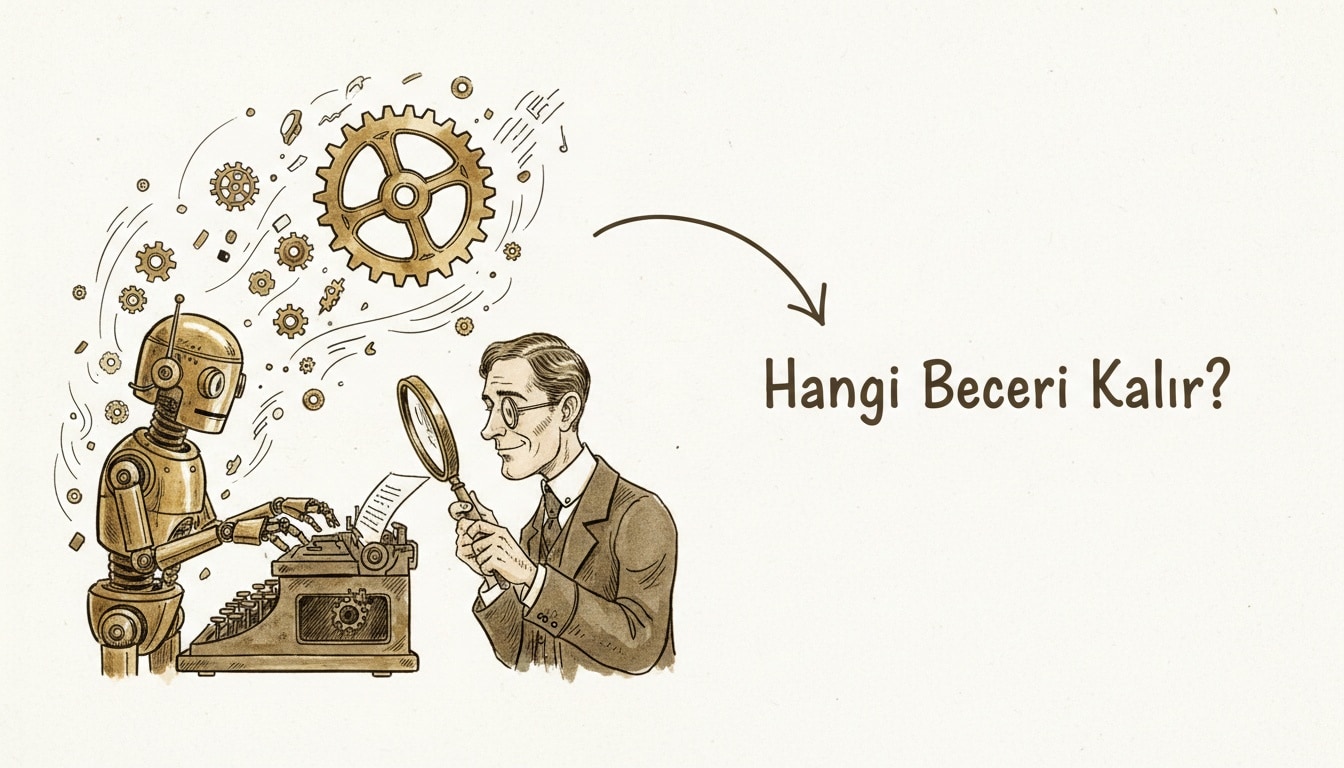
Chasing the newest framework is a losing bet in 2026. The library you learned this week gets replaced by another library within six months, but your system-design instincts, your debugging reflexes, and your clarity in writing carry into every project after that. As AI takes over more of the actual code-writing, what's left standing — and gaining value — is not tool knowledge. It's judgment.
Why framework knowledge is now a weak bet
Saying "I know React" or "I'm a Kubernetes expert" used to be a concrete career signal. Today, AI assistants can produce the syntax, APIs, and common patterns of these tools in seconds. Framework knowledge isn't losing market value by accident — it's losing it because it's now cheap and abundant. What's getting scarcer instead is understanding why a system is designed the way it is, anticipating what will break in production, and telling whether AI-generated code is correct or wrong — because those are built through experience and trial-and-error failure, not learned from a documentation page.
Skills that compound
Some skills carry from project to project and gain value over time, compounding rather than depreciating. The standouts:
- System design: anticipating where an architecture will break and which tradeoff matters at which scale. This transfers across any language or framework.
- Debugging: systematically tracing why a system behaves unexpectedly. AI can list possible causes, but the instinct for which hypothesis to test first is yours.
- Reviewing AI output: examining generated code for security, performance, and correctness — a skill distinct from writing code, and increasingly critical.
- Writing: articulating a complex technical decision clearly. Habits like writing RFCs and design docs are the concrete output of this skill; we covered it in our guide to writing an engineering RFC.
- Product sense: understanding how a technical decision lands on the user and the business. This answers "am I solving the right problem" — a question AI doesn't ask on your behalf.
What recruiters are actually screening for
Per Rootstack's 2026 tech skills report, in 2026 tech recruiters won't just look for clean code — they'll look for developers who think like architects. Being able to explain technical decisions, write clear documentation, and collaborate with product teams is becoming just as valuable as mastering a framework. The report also highlights that candidates with moderate technical skills but outstanding interpersonal ability tend to progress faster through hiring processes.
That doesn't mean technical depth stops mattering — quite the opposite. Technical depth is now a prerequisite, not a differentiator. What differentiates is the ability to transfer that depth to others and situate it in business context.
The risk of over- or under-using AI
There are two opposite failure modes here, and both damage a career equally. The first is rejecting AI outright: insisting on writing every line by hand leads to falling behind on productivity and getting tagged as someone who "can't work with AI." The second is blind trust in AI: accepting generated code without questioning it prevents deep system understanding from ever forming, and the day you actually need that understanding, there's nothing there. The productive middle path is thoughtful integration: using AI as an accelerant while filtering every output through your own judgment.
The practical way to hold that balance is reviewing every significant AI-generated change with the question "how would I test this if I'd written it myself." That habit strengthens your ability to review AI output while also keeping your mental model of the system alive.
Proving impact with metrics
What proves your market value isn't a claim — it's measurement. If you've built an AI-assisted workflow, document the concrete gain it produced: reduced latency, lower error rate, faster delivery. This matters not just in promotion or salary conversations but in steering your own learning plan — you see which skill is actually producing impact. We dug into whether AI genuinely makes developers faster in our AI productivity paradox piece.
Framework knowledge vs. durable skills, compared
Skill type | Example | Value trend | Why |
|---|---|---|---|
Framework/library syntax | A specific state-management API | Declining | AI can produce it in seconds |
System design | Anticipating scale, tradeoffs | Rising | Built through experience, hard to fake |
Debugging | Systematic root-cause analysis | Rising | AI generates hypotheses; your instinct picks one |
Reviewing AI output | Security/performance audit | Rising fast | New and increasingly critical responsibility |
Written communication | RFCs, design docs | Rising | Proves cross-team scope |
Product sense | Choosing the right problem | Rising | AI doesn't decide which problem gets solved |
A self-audit: see where you actually stand
Ask yourself:
- Is what you learned in the last six months a syntax, or a reasoning pattern?
- Have you rejected a solution AI proposed, and been able to explain exactly why it was wrong?
- Can you explain to someone else why a system is designed the way it is, without looking at the docs?
- Was the last technical document you wrote clear enough that someone else could execute the decision without you in the room?
If you're answering "no" to most of these, most of your learning time is probably going toward skills that are depreciating.
A learning plan weighted toward durable skills
Here's my take: in 2026, put most of your learning budget toward these three instead of a new framework:
- Deep-dive one real bug a week — not just fixing it, but tracing its root cause three levels back.
- Critique every significant piece of AI-generated code as if reviewing a colleague's PR — never accept it unexamined.
- Write up one technical decision a month as a short RFC or design note, shared with a real audience.
I'm not saying stop learning new frameworks — just stop making it your primary strategy. A framework gets learned in the moment you need it; judgment gets built over years.
AI literacy: a new baseline skill
None of this means ignoring AI. AI literacy itself — understanding how models work, knowing how to evaluate their outputs — is becoming as foundational as knowing Git. The distinction is that AI literacy isn't tool knowledge, it's a layer of judgment. Being able to ask "why might this model fail at this task" is a far more durable competency than memorizing any one specific API.
zenvanriel's 2026 analysis of AI career pathways reaches a similar conclusion: the careers AI is lifting aren't the ones best at using AI, they're the ones best at evaluating what AI produces. That distinction matters — "being able to use AI" and "being able to notice when AI is wrong" are two very different competencies, and the market is increasingly rewarding the second one.
Frequently Asked Questions
Should I stop learning new technology entirely in the AI era?
No, but reprioritize. You can pick up a new framework quickly when you actually need it; skills like system design and debugging can only be built over time, through real problems.
Is reviewing AI output really a learnable skill?
Yes. The practical way in is reviewing every significant AI-suggested change with "why is this correct, where could it go wrong." Over time that becomes a systematic reflex.
Do employers actually value judgment over framework knowledge?
Increasingly, yes. In hiring, the ability to explain technical decisions, write clear documentation, and collaborate with product teams is being valued more than mastery of a single framework.
What if I answered "no" to most of the self-audit questions?
Deliberately shift part of your learning time toward durable skills: start with a weekly root-cause deep-dive, critical review of AI output, and a monthly written decision record. For more career guidance, see our career and productivity category.