@ahmetcantryk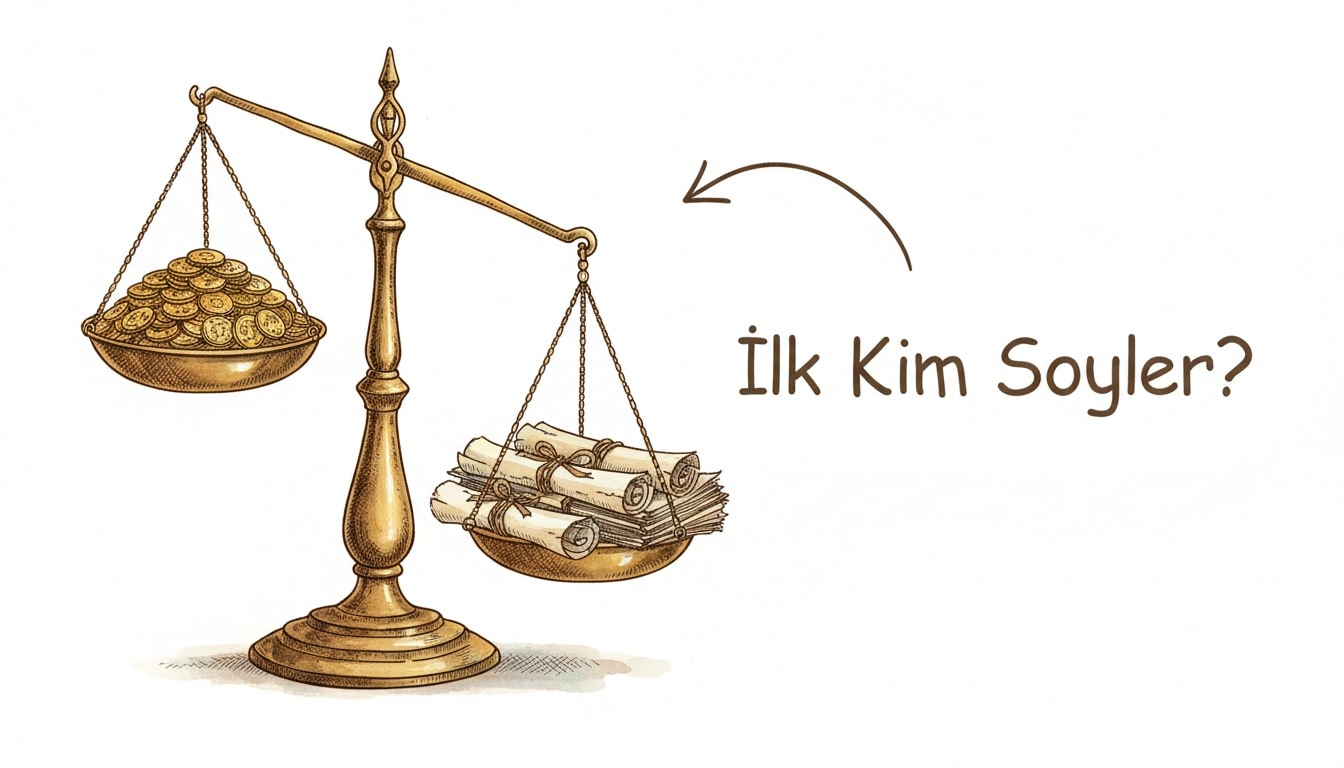
The biggest mistake in developer salary negotiation happens the moment you name a number first. In 2026, the two strongest levers you have are clear: knowing the market band better than the other side does, and putting the concrete impact you've measured in production on the table. Combine both, and negotiation stops being a guessing game and becomes a data comparison.
Researching bands: get ahead of the other side
In places where salary transparency laws have taken hold, seeing a posted range is possible now, but it isn't enough on its own. Sources like Levels.fyi provide actual level-by-company total-comp data — figures far more specific than the "market average" HR tells you. Knowing the base, equity, and bonus components separately for your target company's level before you walk into a conversation tells you which component is actually negotiable once an offer lands.
One of 2026's technical salary guides, HackerX's software salary report, makes the same point: candidates who skip band research end up accepting a below-average offer as "standard." Knowing the band gives you more than negotiating leverage — it gives you the ability to judge how competitive an offer actually is in the first place.
Let them name a number first
The old rule still holds: get the other side to state a number before you do, whenever possible. When asked "what are your expectations," responding with "could I learn the band allocated for this role" instead of a direct figure keeps your leverage intact. The logic is simple: if you name the first number, it becomes your ceiling; if the employer names it first, it becomes your floor, and the room to negotiate upward opens up.
The impact dossier: arguing with numbers
The strongest argument in a salary conversation isn't a feeling of deserving more — it's concrete numbers you've measured in production. An impact dossier should include:
- Latency and performance: how much you cut p95 latency, and what measurement backs it up.
- Error rate: how much you reduced a system's error rate, with a before-and-after comparison.
- Cost per request: if you shipped an infrastructure optimization, the monthly or annual dollar savings.
- Revenue impact: if your work touches revenue directly (conversion rate, churn reduction), include that figure too.
Documented production metrics carry far more weight at the negotiating table than a claim of "I'm a good engineer." Building this dossier also pays off in promotion conversations — we cover proving scope in more depth in our Staff engineer path guide.
The AI-skills premium: 2026's biggest variable
The most striking data point of 2026 comes from PwC's Global AI Jobs Barometer: roles requiring AI skills carry an average 62% wage premium over the same role without that requirement — up from 57% the year before, and still climbing. In some sectors, like consumer markets, that premium reaches as high as 118%, while government and public-sector roles see a more modest 16%. The report analyzed more than a billion job postings across 27 countries, so this isn't a trend confined to one region.
The practical takeaway: putting "used AI tools" on your resume isn't enough — you need to make concrete which AI-assisted workflow you built and what measurable gain it produced. We covered boosting developer output with AI in our developer productivity with AI tools guide.
A negotiation matrix by comp component
Component | Negotiation flexibility | Argument to make |
|---|---|---|
Base salary | Usually low-to-moderate | Market band data, competing offer |
Equity | Usually high | Long-term contribution potential, level comparison |
Signing bonus | Moderate-to-high | Cost of leaving current role, timing of competing offer |
Promotion timeline | Variable | Written commitment, 6–12 month review |
Remote-work flexibility | Company-dependent | Measurable track record of productivity |
Competing offers and total-comp components
A competing offer remains the single strongest negotiating tool — but be honest when using one. A bluffed "I have another offer" statement, once caught, destroys trust entirely. If you have a genuine competing offer, compare the total package component by component: base, vesting schedule, health coverage, remote-work policy, and promotion velocity. Sometimes an offer with a lower base salary ends up worth more overall thanks to a faster vesting schedule or a clearer promotion path.
A negotiation script, step by step
A concrete script is more useful than abstract advice:
- The band question: "Could you share the compensation band you're considering for this role?"
- When the offer lands: "Thank you for the offer — I'd like a few days to review it." Never respond on the spot.
- The counter: "Based on market data and [a concrete impact metric], could we discuss around [X] on the base, or a different balance in the total package at [Y]?"
- Silence: after stating your number, don't fill the silence yourself — wait for the other side to respond.
Here's my observation: most developers treat negotiation like a conflict and pull back too early. A well-prepared negotiation actually signals something the other side wants to see: that this person can defend their own value with data — which is exactly the trait you're trying to get hired for in the first place.
Where this overlaps with a promotion case
Salary negotiation and a promotion case draw on the same raw material: documented impact. The latency, error-rate, and cost metrics you collect while building a promotion packet are directly reusable in your next salary conversation. We cover proving scope in that context in our Staff engineer path guide.
Frequently Asked Questions
What if I'm forced to name a number first?
Give a wide range instead of an exact figure, and back the range with market data. Saying "based on my research, roles at this level fall between X and Y" leaves more flexibility than stating a single number.
Does the AI-skills premium apply to every role?
No — it varies significantly by sector, ranging up to 118% in consumer markets and closer to 16% in the public sector. But the 62% average represents real leverage for most software roles.
What if my impact dossier has no concrete numbers yet?
Start measuring now. Track metrics like latency, error rate, or cost regularly — the data you'll use in a negotiation six months from now is being generated today.
Can I negotiate without a competing offer?
Yes, but your argument needs to be data-driven: market band data and documented production impact. A competing offer is the strongest lever, but it isn't the only valid one. For more career strategy, see our career and productivity category.