@ahmetcantryk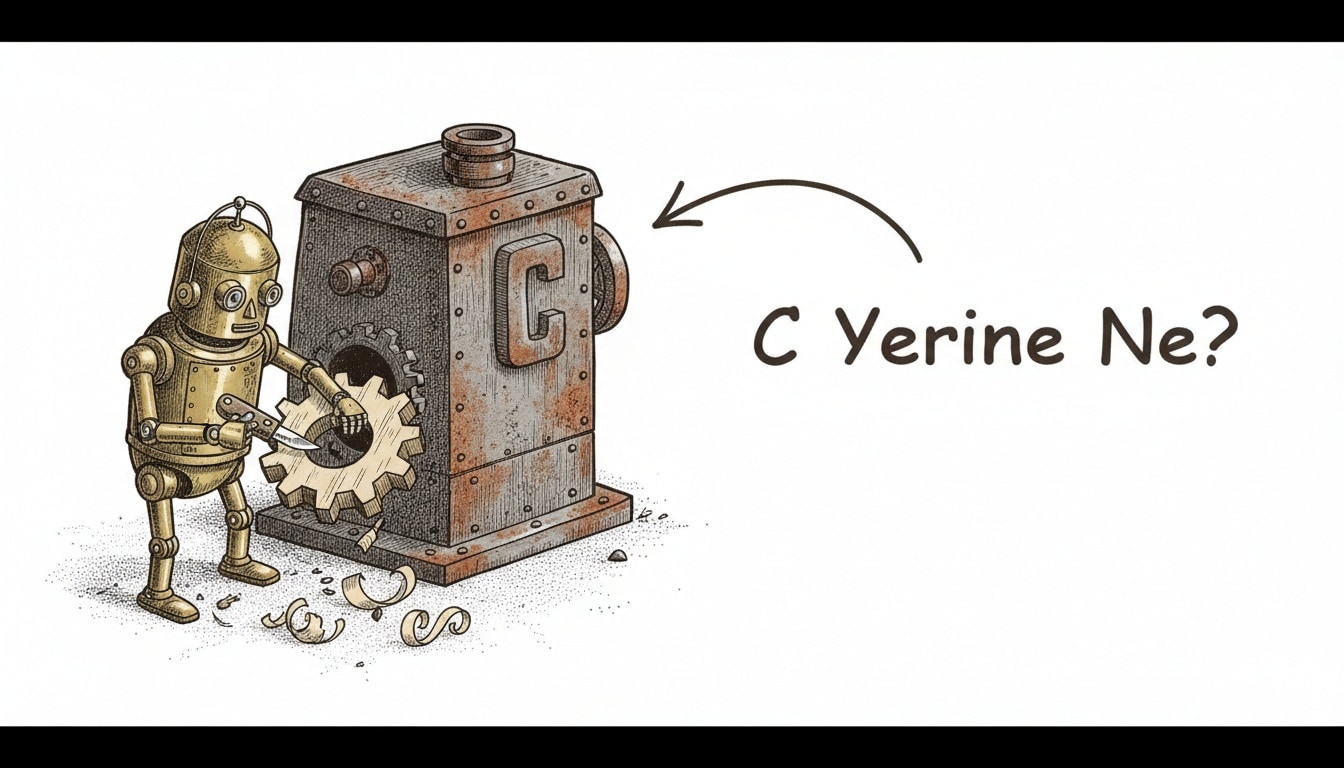
Why does Zig get compared to C instead of Rust? Because its goal is different: not to beat Rust's borrow checker on safety, but to keep C's simplicity while removing its traps — undefined behavior, weak tooling, a primitive build system. In 2026, that pragmatic positioning has made Zig a fast-growing alternative among systems programmers.
Eight years into development, Zig still hasn't hit 1.0 — but it sits at #39 on the TIOBE index as of April 2026, and it placed fourth among most-admired languages in Stack Overflow's 2025 survey, at 64% admiration. This piece covers why Zig exists, what comptime actually means, and what 1.0 will lock in.
What is Zig's goal, really?
As Zig creator Andrew Kelley has repeated often, Zig isn't trying to be "safer than Rust" — it's trying to be a language that does everything C does, but better. That means no borrow checker, no ownership system; its memory-safety guarantees don't reach Rust's level. In exchange, the learning curve is far flatter, the compilation model is far simpler, and interop with C is frictionless.
What is comptime, and why does it get so much attention?
Zig's most distinctive feature is comptime: a metaprogramming mechanism that lets you write code that runs at compile time. Unlike C++ templates or Rust macros, comptime isn't a separate mini-language — it's ordinary Zig code, just executed at compile time. That makes writing generic data structures, compile-time validation, and zero-cost abstractions possible without learning a new syntax.
fn List(comptime T: type) type {
    return struct {
        items: []T,
        len: usize,

        fn push(self: *@This(), item: T) void {
            self.items[self.len] = item;
            self.len += 1;
        }
    };
}

const IntList = List(i32);
In this example, the T: type parameter lets List act as a generic type generator — but under the hood there's no special generics syntax, just ordinary Zig code that happens to run at compile time.
What does "no hidden control flow" actually mean?
One core tenet of Zig's design philosophy: reading the code should let you predict what operations actually happen. No operator overloading, no hidden allocation, no hidden exception throwing. When you see a function call, you can be sure there's no surprise constructor, no surprise heap allocation, and no surprise exception chain hiding behind it. That's a direct answer to one of C++'s most criticized traits: code doing far more than it appears to.
Feature | C | Zig | Rust |
|---|---|---|---|
Memory-safety guarantee | None | None (but less UB) | Yes (borrow checker) |
Metaprogramming | Preprocessor macros | | Macros + generics |
Cross-compilation | Requires a separate toolchain | Built in, one command | Requires |
C interop | — | Zero-friction | Requires an FFI layer |
Learning curve | Low | Moderate | High |
Why does cross-compilation get so much praise?
Zig's compiler ships an LLVM-based cross-compilation toolchain built right in — no separate sysroot to set up, just a single command like zig build-exe --target x86_64-linux-gnu to build for a different architecture and OS. That capability is strong enough that Zig's C/C++ compiler (zig cc) gets used purely as a cross-compilation tool even by projects that don't write any Zig code — Uber using it this way in its own cross-compilation infrastructure is a good example.
Where is Zig actually used today?
Zig's three best-known use cases: Ghostty (a fast, GPU-accelerated terminal emulator), TigerBeetle (a high-performance database purpose-built for financial transactions), and multiple companies' cross-compilation infrastructure. All three validate Zig's promise: performance close to C, fewer memory bugs, and a far more comfortable build experience. For teams looking at Rust alternatives for systems programming, comparing this against the story of pgrust rewriting Postgres in Rust makes Zig's position clear: Rust sells a safety guarantee, Zig sells simplicity and control.
What will the 1.0 release lock in?
Zig's 2026 roadmap emphasizes compiler speedups, the return of async/await, fuzzing support, and code coverage tooling. Once 1.0 lands, the language's core syntax and standard library API become stable, ending the current era of frequent breaking changes. The release is expected sometime between mid- and late 2026, though the Zig team has historically avoided aggressive predictions — the "not 1.0 yet" state JetBrains has noted is a deliberate show of caution.
My honest take: Zig's "we're not trying to beat Rust" stance is its biggest strength. There's a real segment of the systems programming world that doesn't want to learn a borrow checker, and Zig fills that gap honestly. We see a similar pragmatic bias toward compiler performance and language design in TypeScript 7's Go-rewritten compiler — both prioritize building tools that are faster and less surprising, not tools that are flashier.
What are Zig's build system and package manager like?
Zig's build system is written in Zig itself rather than a separate Makefile or CMake file: a build.zig file defines targets, dependencies, and build steps using ordinary Zig code. That means your build logic benefits from type checking and comptime too — there's no separate build language to learn. The package manager side is still maturing: a build.zig.zon file defines dependencies and their versions, but a central package registry — a crates.io or npm equivalent — hasn't reached the same maturity in the Zig ecosystem yet. That's an expected gap for a pre-1.0 language, but it's one of the ecosystem's most common complaints; many teams currently manage dependencies through direct Git references instead.
Frequently Asked Questions
Is Zig trying to replace Rust?
No. Zig's creator explicitly rejects that framing — Zig's goal is replacing C, not beating Rust on memory safety. There's no borrow checker, so it doesn't offer Rust's compile-time memory-safety guarantee; in exchange it offers a much simpler learning curve and frictionless C interop.
How is comptime different from C++ templates?
Comptime isn't a separate mini-language or special syntax — it's ordinary Zig code, just executed at compile time. C++ template metaprogramming typically requires a different and harder-to-read syntax, while writing a generic data structure in Zig looks syntactically identical to writing a normal function.
Can Zig be used in production today?
Yes, even pre-1.0. Projects like the Ghostty terminal emulator and the TigerBeetle database run Zig in production. That said, pre-1.0 releases carry breaking-change risk, which is why most large enterprise projects are waiting for 1.0.
What do Zig's TIOBE and Stack Overflow rankings actually show?
On the April 2026 TIOBE index, Zig sits at #39 with a 0.31% rating — a sign of a niche but growing community. In Stack Overflow's 2025 developer survey, it placed fourth among most-admired languages at 64% admiration, indicating that people who use it are, on the whole, satisfied with it.