@ahmetcantryk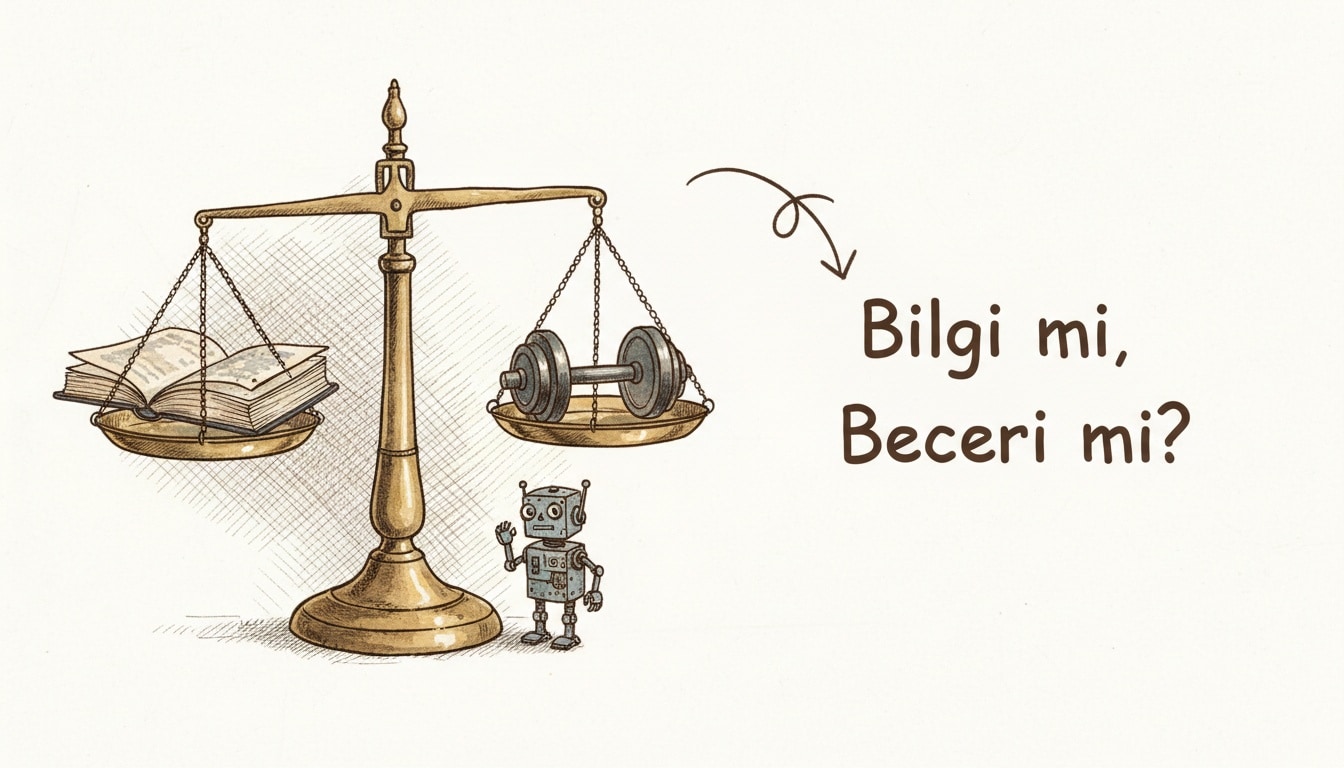
As of July 2026, practitioners keep repeating the same number: roughly 80% of "we need to fine-tune" requests are actually solved by better retrieval. That single stat should reframe how you approach fine-tuning vs RAG. The two are not rivals fighting for the same job — they fix different failures. RAG (retrieval-augmented generation) fetches relevant documents at query time and feeds them into the prompt, so the model answers from facts it never memorized. Fine-tuning retrains the model's weights so it changes how it responds by default.
The rule that survives contact with production: reach for RAG when the answer depends on data you own, and reach for fine-tuning when you need a consistent format, tone, or skill. This piece breaks down the choice with current cost figures, a decision table, and the mistakes we made shipping both.
What is the difference between fine-tuning and RAG?
RAG leaves the model untouched and hands it fresh context at inference, retrieving matching chunks from a knowledge base and stuffing them into the prompt. Fine-tuning changes the model itself, running extra training on your examples so new behavior bakes into the weights. One updates what the model reads; the other updates what the model is.
A useful mental model: RAG is an open-book exam. The model still reasons the same way, but you slide the right page under its nose right before it answers. Fine-tuning is studying for the exam — the model internalizes patterns so it responds differently even with no reference material in front of it.
That distinction drives everything. Because RAG never touches weights, you update your knowledge base at 3pm and the model "knows" the new fact at 3:01. Because fine-tuning bakes patterns in, it can shift tone, enforce a JSON schema, or teach a niche skill no prompt reliably produces — but it cannot learn a fact you didn't put in the training set.
Comparison table: fine-tuning vs RAG
Scan these rows first — they decide most real projects.
Dimension | RAG | Fine-Tuning |
|---|---|---|
What it changes | The context at query time | The model's weights |
Best for | Fresh, factual, private knowledge | Consistent format, tone, or skill |
Update speed | Instant (re-index documents) | Slow (re-train and redeploy) |
Source attribution | Yes, you can cite chunks | No, knowledge is opaque |
Upfront cost | Low, no training run | Medium, needs labeled data |
Per-query cost | Higher (more prompt tokens) | Lower (shorter prompts) |
Hallucination control | Strong, grounds answers in sources | Weak, can still confidently invent |
Data volume needed | Tens of documents work | ~1,000 quality examples |
Practical rule: if the correct answer lives in a document you could hand a new hire, use RAG. If the problem is how the model writes or classifies rather than what facts it knows, fine-tune.
When should you use RAG?
Use RAG when answers depend on knowledge that changes, is private, or is too large to fit in a prompt. It's the default for question-answering over your own docs, support knowledge bases, and anything where you must cite a source or where yesterday's data would be wrong today.
RAG is the right lever when:
- Your knowledge changes often. Product docs, pricing, and policies shift weekly. Re-indexing is cheap; re-training is not.
- You need citations. Regulated and internal-facing tools must show where an answer came from. RAG returns the source chunks; a fine-tuned model can't. It's also the single most effective way to reduce LLM hallucinations.
- You have little labeled data. RAG works with a handful of documents. No training set required.
The catch: RAG is only as good as its retrieval. If the vector search returns the wrong chunks, the model answers from garbage. Chunking, embedding quality, and your vector store matter more than the LLM here — our vector database comparison covers the trade-offs, and how to build a RAG system walks the full pipeline. The 2026 frontier is agentic RAG, where an agent plans multi-step retrieval instead of one blind lookup (Singh et al., Agentic RAG survey).
# RAG: retrieve first, then answer from the retrieved context
def answer(question: str) -> str:
    chunks = vector_store.search(embed(question), top_k=5)   # find relevant docs
    context = "\n\n".join(c.text for c in chunks)
    prompt = f"Answer using ONLY this context:\n{context}\n\nQ: {question}"
    return llm(prompt)                                        # weights untouched
Swap a document in the store and the next answer reflects it — no retraining, no redeploy.
When should you use fine-tuning?
Use fine-tuning when you need the model to behave differently by default — a strict output format, a specific voice, or a specialized skill that prompting can't reliably produce. It shines when the problem is consistency and style, not missing facts.
In 2026 this is far cheaper than it was two years ago. Parameter-efficient methods train a small adapter instead of the full model. The methods worth knowing:
Method | What it does | Best fit in 2026 |
|---|---|---|
LoRA | Freezes the base, trains low-rank adapters | Standard PEFT on a rented GPU |
QLoRA | 4-bit base + LoRA adapters | Single-GPU tuning, ~90% of full-FT quality |
SFT (hosted) | Supervised tuning via API + JSONL | OpenAI GPT-4.1 family, Claude Haiku |
RFT / GRPO | Reward-based tuning for hard tasks | OpenAI o4-mini reinforcement fine-tuning |
The numbers are concrete. With QLoRA you can fine-tune an open model like Llama 4 or a Qwen3 variant on a single A100 80GB — roughly 6 hours over 50k examples for about $12. Hosted supervised fine-tuning from OpenAI covers the GPT-4.1 family (training around $3/M tokens on GPT-4.1, cheaper on 4.1 nano), with fine-tuned inference billed at 1.5x the base rate (OpenAI model optimization docs). For grading-based tasks, reinforcement fine-tuning on o4-mini runs at $100 per training hour (OpenAI RFT guide). Note the closed-frontier gap: Anthropic's Opus 4.7 and Sonnet 4.6 aren't fine-tunable — only Claude Haiku — which is why many teams distill a big model's outputs into a small open one.
We fine-tuned a ticket classifier on ~1,200 curated examples: accuracy went from 88% (prompted) to 96%, prompt length dropped 70%, and per-call cost fell by roughly half once we stopped shipping a 900-token instruction block on every request. My opinionated take: data quality beats volume every time — 1,000 hand-checked examples routinely beat 100,000 scraped ones, and it's the lever most teams ignore.
What fine-tuning does not fix: stale knowledge. A model fine-tuned in March doesn't know April's price change unless you retrain. This is the most common mistake we see — teams fine-tune to inject facts, then wonder why the model is confidently out of date. Facts belong in RAG; behavior belongs in fine-tuning.
Fine-tuning vs RAG: how do I decide?
Ask what's actually broken. If the model lacks facts, use RAG. If it has the facts but responds in the wrong way — bad format, wrong tone, weak at a niche task — fine-tune. If both are broken, do both.
A decision path that settles most cases:
- Is the answer in a document? If a fact lives in text you could retrieve, start with RAG. Cheaper, faster to ship, updatable.
- Does the output need a strict shape or voice? If prompting can't hold the format or tone reliably, fine-tune for consistency.
- Is your knowledge volatile? If facts change weekly, never bake them into weights. RAG only.
- Do you have ~1,000 clean labeled examples? If not, you can't fine-tune well yet. Improve the prompt or ship RAG first.
- Still failing on both fronts? Combine them — and always benchmark outputs with evals before and after.
That combination is where most mature systems land. A fine-tuned 8B-class open model wrapped in strong RAG is the 2026 cost-per-quality sweet spot: the fine-tune handles how, retrieval handles what. Before building either, exhaust prompt engineering patterns first — a better prompt often removes the need for both. For the bigger picture, browse our AI engineering guides.
Frequently Asked Questions
What is the difference between fine-tuning and RAG in the simplest terms?
RAG gives the model information at question time without changing the model — it's an open-book exam. Fine-tuning retrains the model so it behaves differently by default — it's studying before the exam. Use RAG to add knowledge, fine-tuning to change behavior, format, or tone.
Is RAG always cheaper than fine-tuning?
Not exactly. RAG has near-zero upfront cost since there's no training run, so it's cheaper to start. But it adds prompt tokens on every query, so per-call cost is higher. With QLoRA, tuning an open 8B model now costs around $12, and the shorter prompts can pay that back fast at high volume. Match the choice to your traffic, not the sticker price.
Can I use fine-tuning and RAG together?
Yes, and it's the strongest pattern for production. Fine-tune the model to reliably produce your output format and voice, then use RAG to feed it current, citable facts at query time. The fine-tune fixes behavior; retrieval fixes knowledge. Most mature 2026 systems run both layers.
Does fine-tuning stop hallucinations?
No — this is a common misconception. Fine-tuning shapes behavior but can still make a model confidently invent facts, and it can't cite sources. RAG is the far better fix because it grounds answers in retrieved text you can attribute. If accuracy on facts is the goal, reach for RAG.