@ahmetcantryk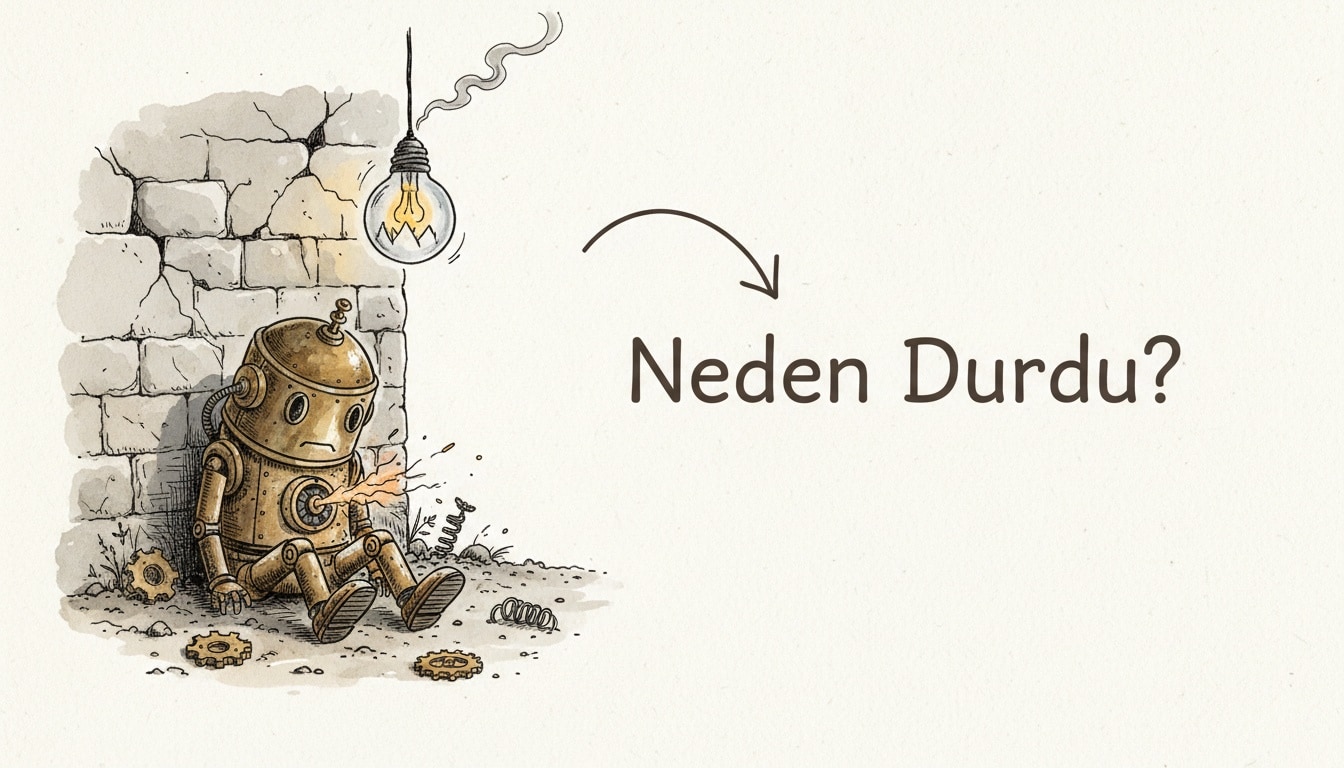
On the evening of July 29, 2026, claude.ai, the Claude API, Claude Code, and Claude Cowork all started throwing "Request Failed With 529 Overloaded" errors at once. Anthropic hit two separate network failures within a 24-hour window: capacity dropped, traffic got rerouted, and thousands of requests failed outright. Services fully recovered late on July 30, but the incident is a serious reminder for anyone running production systems on top of Claude.
Timeline: Two Failures in 24 Hours
Per Anthropic's own status-page updates, this wasn't one long outage — it was two distinct network failures, which is why some users experienced it as intermittent rather than continuous. BleepingComputer's reporting confirms Anthropic acknowledged the outage was felt worldwide.
Time (UTC) | Event |
|---|---|
Jul 29, 19:49 | First failure begins; Anthropic opens an investigation |
Jul 29, 20:33 | Root cause identified, fix underway (no cause or ETA disclosed) |
Overnight Jul 29–30 | A second, separate network failure cuts capacity again |
Late Jul 30 | All services back to full capacity |
What Broke, and Why
The root cause traced to network-level failures inside Anthropic's infrastructure — two distinct incidents that cut capacity and rerouted traffic, causing requests to fail. The affected surfaces spanned the claude.ai chat interface, the Claude API developers call directly, terminal-based Claude Code, and Claude Cowork's background agents. Users reported failed prompts, slow responses, interrupted conversations, and repeated 529 errors.
One detail stands out: Claude for Government stayed online throughout. It runs on infrastructure fully isolated from the consumer and developer surfaces that took the hit — a sign Anthropic takes isolation seriously for critical workloads, but also an explanation for why the shared capacity pool absorbed so much of the damage.
Why This Is More Than a Company Blip
For teams building production workflows on Claude Code, Cowork, or direct API integrations, an outage like this isn't an abstract announcement — it's a direct business interruption. An agent reviewing code in your CI pipeline, an API call backing a customer-support bot, an automated content pipeline — all of it can hit the same "Overloaded" wall simultaneously. My take: architectures that depend 100% on a single provider are no longer a defensible engineering choice in 2026. No major LLM provider guarantees zero downtime, and both OpenAI and Anthropic have had comparable incidents in recent history.
Read alongside ChatGPT's recent run of back-to-back outages, a clearer pattern emerges: frontier model providers occasionally struggle with reliability as demand and infrastructure complexity both keep climbing. That's not a knock on any one vendor — it's a realistic architectural assumption.
Why AI Provider Outages Keep Piling Up in 2026
This isn't Claude's only outage this year — a similar worldwide access issue hit in January 2026. The pattern isn't a coincidence: inference cost and traffic for frontier models have compounded since 2025, and providers are scaling new model releases and agentic products (Claude Cowork, ChatGPT Work) at the same time. That combination runs capacity close to the edge, so a small network failure gets felt across a wide surface.
Provider | Period | Incident |
|---|---|---|
Anthropic (Claude) | January 2026 | Worldwide access issue |
OpenAI (ChatGPT) | July 2026 | 4 separate failures in 4 days |
Anthropic (Claude) | Jul 29–30, 2026 | Two network failures in 24 hours, 529 errors |
The takeaway is plain: no provider is immune. Build your architecture around "what does my system do when the provider goes down," not "which provider never goes down."
3 Concrete Takeaways for Developers
Three steps meaningfully cut the blast radius of outages like this one on your production systems:
- Add exponential-backoff retry logic. Transient overload errors like 529 usually clear within seconds; escalating delays instead of fixed-interval retries both ease pressure on the provider and raise your success rate.
- Evaluate multi-provider fallback on critical paths. Instead of locking into one model family, a routing layer that can shift at least your most critical endpoints to a second provider (Gemini or GPT-5.6, say) can keep service running instead of stopping cold during an outage.
- Design graceful degradation with a circuit breaker. Rather than letting the whole system crash when a provider degrades, a circuit breaker that falls back to a cheaper/faster model or a cached response preserves the user experience.
- Checkpoint long-running agent tasks. For a task like a Claude Code session running in the background for hours, an agent that periodically writes its progress to disk or a database can resume where it left off after an outage — a far cheaper recovery strategy than starting over.
For a hands-on walkthrough of these patterns, see our retries, backoff, and circuit breakers guide — it covers the same logic for general API integrations step by step.
A minimal exponential-backoff implementation looks like this:
import time
import random

def call_with_backoff(fn, max_retries=5, base_delay=1.0):
    for attempt in range(max_retries):
        try:
            return fn()
        except OverloadedError:
            if attempt == max_retries - 1:
                raise
            delay = base_delay * (2 ** attempt) + random.uniform(0, 0.5)
            time.sleep(delay)
What's Next: What Anthropic Has Said
Anthropic said it would share a post-incident root-cause analysis, but as of early August 2026, when this article published, a detailed post-mortem wasn't yet public. Based on the company's past practice, expect a status-page update summarizing the affected infrastructure component and mitigations taken. Teams with production dependencies on Claude should add Anthropic's status page to their watch list for exactly this kind of disclosure. If you're weighing frontier providers side by side, see our Claude Sonnet 5 vs GPT-5.6 vs Gemini 3.5 comparison; for more AI developments, follow our AI section.
Frequently Asked Questions
What caused Claude's July 29–30, 2026 outage?
Per Anthropic, the root cause was two separate network-level failures in its infrastructure that cut capacity and rerouted traffic, causing requests to fail. Anthropic hadn't published the detailed technical root cause as of this article's publication.
Which Claude products were affected?
The claude.ai chat interface, the Claude API, Claude Code, and Claude Cowork were all affected. Claude for Government kept running throughout thanks to its isolated infrastructure.
How long did the outage last?
The first failure began the evening of July 29 (around 19:49 UTC); a second, separate failure hit within the same 24-hour window. All services were back to full capacity late on July 30.
How can I protect my production system from outages like this?
Exponential-backoff retry logic, multi-provider fallback for critical paths, and graceful degradation via a circuit breaker are the three most effective layers of defense. See our retries/backoff/circuit-breaker guide for a detailed implementation.